



Cheap foam adhesive tapes 2026: prices from the factory, catalog and review
2026-05-07
- Why the price of foam adhesive tapes in 2026 depends on density, not just footage
- Specifications: What to look for in the specifications before purchasing
- Comparison of materials: PPU vs PPE and rubber for different tasks
- Pricing factors: why cheap foam adhesive tapes vary
- Certification and standards: how to confirm product quality in the Russian Federation
- Application in industries: real cases of savings and efficiency
- How to order directly from the factory: logistics, terms and minimum quantities
- Frequently Asked Questions
- Conclusion and next steps
Why the price of foam adhesive tapes in 2026 depends on density, not just footage
In our practice of purchasing industrial materials over the past 15 years, we have repeatedly encountered a situation where the customer chose a supplier solely based on the lowest price per roll, ignoring the density of the foam and the type of glue. The result was predictable: after three months of operation, the tape shrinked by up to 40%, leaving gaps in the equipment seals, which led to production line downtime costing more than 2 million rubles. If you are lookingcheap foam adhesive tapes, it is important to understand that real savings are achieved not through purchasing the thinnest material, but through the correct selection of specifications for a specific task, which eliminates repeated purchases and repairs.
The market of 2026 dictates new rules: raw materials have become more expensive, but production technologies have become more efficient. Factories working directly with exports offer solutions that compete in price with local brands, but surpass them in adhesion to complex surfaces such as powder paint or low-energy plastics (PP, PE). A striking example of this approach is the companyEnping Sunli Adhesive LLC. Having started its journey back in 1997, this manufacturer has accumulated 23 years of experience in the development and production of high-quality adhesive materials. Specializing in a wide range of solutions - from tapes based on PE and EVA foams to high-tech VHB tapes and nano-magnetic series - the plant has proven that direct supply allows you to combine competitive prices with premium quality, confirmed by ISO 9001:2008 and ISO 14001 certificates.
In this article, we will look at how to distinguish a high-quality factory product from a cheap analogue, which EAC and GOST certificates are required for legal import into the Russian Federation, and we will provide a real calculation of the cost of ownership for different types of tapes. Our experience shows that manufacturers such as Sunly Adhesive, who offer flexible OEM/ODM conditions and tailoring of adhesive properties to specific customer needs, become reliable partners for industries where bond durability is critical.
Our goal is to give you the tools to make an informed decision. We will not use marketing slogans. Instead, you will receive specific parameters: thickness, operating temperature, adhesive strength and minimum shipment quantities. One of our clients, a manufacturer of ventilation equipment, reduced the cost of sealing by 28% precisely after switching to wholesale purchases of straight tapes with the correct technical characteristics, instead of buying “universal” expensive analogues from distributors.
Specifications: What to look for in the specifications before purchasing
When requesting a commercial proposal, many managers send a table showing only the roll size and the total price. It's a trap. The key parameter that determines the durability of the seal is the density of polyurethane foam (PPU) or polyethylene (PPE), measured in kg/m³. For industrial applications, the optimal range is from 30 to 60 kg/m³. Material with a density below 25 kg/m³, which is often offered as the cheapest option, has an open cellular structure that allows moisture and dust to pass through, which is unacceptable for electrical switchboard equipment or outdoor advertising.
The second critical parameter is the type of adhesive layer. In 2026, acrylic adhesive with high initial tack (tack) became the de facto standard for universal applications. Rubber adhesives, although cheaper to produce, have a significant drawback: they lose their properties at temperatures above +60°C and are susceptible to oxidation under the influence of ultraviolet. We conducted tests where rubber tape on the sunny side of a building lost adhesion after 8 months, while acrylic tape of the same thickness lasted more than 5 years. If your equipment operates in elevated temperatures or outdoors, saving on the type of adhesive will be a guarantee. That is why leading factories, including Enping Sanli Adhesive, rely on modified acrylic compositions that provide stability over a wide temperature range.
The thickness of the foam layer also requires careful analysis. A common misconception is that the thicker the tape, the better the seal. In fact, excess thickness (more than 10 mm for flat joints) leads to a “springing” effect when the cabinet door or hatch does not close tightly due to the material’s resistance to compression. For most vibration and dust protection applications, a thickness of 3–5 mm with a compression ratio of 50% is sufficient. It is important to request a graph of compression force versus deformation from the supplier. The absence of such a schedule in the technical documentation of the plant is the first sign of handicraft production.
Don't forget about the operating temperature range. Cheap Chinese analogues without proper stabilization often have an operating range from -20°C to +70°C. For Russian conditions, especially in Siberia and the Far East, this is critically low. In winter, at -30°C, such material becomes tanned and cracks when vibrating. High-quality factory tapes with modified additives retain elasticity down to -40°C and even -50°C. When ordering, be sure to specify this parameter and request a test report for frost resistance according to GOST.
Finally, pay attention to the supporting base (liner). Paper liners are cheaper, but they are hygroscopic and can become soggy when stored in a humid warehouse, making it difficult to unwind the roll. Polyethylene or PET liners cost a little more, but provide stable roll geometry and the convenience of automatic feeding into liner die-cutting machines. If you plan to use the tape on an automatic line, having a high-quality siliconized PET liner is a must, otherwise you will encounter breaks and equipment downtime.
Action:Request a quality data sheet from your current supplier indicating the density, type of adhesive and temperature range. Compare these numbers with your project requirements.
Comparison of materials: PPU vs PPE and rubber for different tasks
Choosing between polyurethane foam (PUF), polyethylene foam (PEF) and foam rubber often poses challenges for purchasing engineers. Each material has its own niche application, and trying to replace one with another for the sake of economy can lead to technical problems. Below we provide a detailed comparison based on real implementation cases in various industries.
| Parameter | Foamed polyurethane (FPU) | Foamed polyethylene (PPE / EPE) | Foam rubber (CR/EPDM) |
|---|---|---|---|
| Cell structure | Mainly open (breathable) | Closed (waterproof) | Closed or semi-open |
| Waterproofing | Low (requires film or impregnation) | High (absolute barrier) | High |
| Temperature | -40°C to +90°C | -60°C to +80°C | -45°C to +120°C (EPDM) |
| Chemical resistance | Medium (afraid of solvents) | High (inert to acids/alkalis) | Very high (oil resistance for CR) |
| Cost (relative) | Low / Medium | Low | High |
| Main Application | Filtration, sound insulation, soft seal | Packaging, waterproofing of joints, construction | Cars, aggressive environments, high loads |
Polyurethane foam (PUF) remains a leader in applications where shock absorption and sound absorption are required. Its open cellular structure perfectly dampens vibrations of pump and compressor housings. However, if you use polyurethane foam to seal the housing of an outdoor switchboard, moisture will inevitably penetrate inside through the pores of the material, causing corrosion of the contacts. In this case, the only correct solution would be to switch to PES. We have seen cases where customers tried to save money by using polyurethane foam with water-repellent impregnation, but the impregnation was washed out after the first heavy rain, and the seal was broken.
Foamed polyethylene (FPE) is the number one choice for construction and installation work where moisture resistance is important. It is chemically inert, does not rot and is very cheap. Its main disadvantage is low heat resistance. At temperatures above +80°C it begins to soften and lose its shape. Therefore, it is strictly forbidden to use PPE in the engine compartment of cars or near heating elements of boilers. For such tasks, despite the high price, ethylene-propylene rubber (EPDM) is required.
Porous rubber (especially based on chloroprene CR or EPDM) occupies the premium segment. It is indispensable in the oil and gas industry, automobile transport and energy, where oils, fuels or extreme temperatures are present. Buying rubber bands for household appliances or simple packaging of cabinet doors is an unnecessary expense. But when it comes to sealing the hatches of diesel locomotives or ship bulkheads, compromises are unacceptable. Rubber provides repeated compression without residual deformation, which polymer foams cannot guarantee.
When choosing between these materials, ask yourself the question: “What is the main enemy of my knot?” If it’s water, take PPE. If vibration and noise are PPU. If there is oil and heat - rubber. Trying to find one material for all cases will lead to either overpayment or premature failure of the product. Manufacturing plants often offer combined solutions, for example, polyurethane foam with aluminum foil lamination, which combines shock absorption with hydro- and vapor barrier. Modern lines, such as those of Enping Sanli Adhesive, allow the creation of complex multi-layer structures, including double-sided tapes based on EVA foam and specialized finger-lift tapes for ease of installation.
Action:Determine the main threat to your seal (water, heat, vibration) and select a material strictly for this task, using the table above as a checklist.
Pricing factors: why cheap foam adhesive tapes vary
The query “cheap foam adhesive tapes” in search engines produces hundreds of offers with a price range of up to 300% for a visually identical product. Where does this difference come from? The first and most important thing is the volume of purchase and form of delivery. Factories work with large rolls (jumbo rolls) with a width of 1200–1300 mm and a length of up to 2000 meters. The price per square meter in this format is minimal. When a distributor buys a jumbo roll, cuts it into narrow strips (10, 20, 50 mm), winds it into small sleeves, packs it in boxes and stores it in a warehouse, the cost of the product increases by 2-3 times. Buying directly from the manufacturer or a large wholesaler that offers a slitting service to your size can save you significant money.
The second factor is the quality of raw materials. Manufacturers can use primary granulate or secondary raw materials (recyclate). Tape made from recycled polyethylene will have a gray or yellowish tint, an uneven structure and a specific odor. Its mechanical properties are unstable: today the batch is elastic, tomorrow it is brittle. Such materials are unacceptable for critical components. However, for temporary protection of surfaces during transportation or rough construction work, recycled tape is ideal and costs 40% less. An honest supplier will always warn you about the composition of the raw materials.
The third hidden factor is the thickness of the adhesive layer. Unscrupulous manufacturers save on glue by applying a layer 15–20 microns thick instead of the standard 25–30 microns. Visually this is not noticeable, but the adhesion force drops by 30–40%. Such tape can peel off under its own weight or at the first thermal expansion of the surface. This can only be checked in the laboratory or by trial operation. This is why working with trusted factories that provide test samples is critically important.
Logistics and packaging also affect the final price. Heavy rolls require reinforced cardboard containers and wooden pallets. The use of cheap packaging leads to the fact that the rolls are flattened during transportation, turning into an oval. It is impossible to unwind such a tape without damage - it breaks or goes in waves. We have recorded cases where up to 15% of products in a batch were rejected precisely because of poor packaging when delivered from the regions. Include the cost of reliable packaging in the calculation of the total price, this is insurance against losses.
Finally, seasonality and exchange rate fluctuations. Polymer prices are tied to oil prices and exchange rates. During periods of falling ruble, prices for imported raw materials rise instantly. Factories with raw material inventories or long-term contracts can keep prices stable longer. Planning purchases a quarter in advance allows you to fix favorable prices and avoid price surges during the peak construction season (spring-summer).
Action:When comparing KP, ask not only the price per roll, but also the price per square meter, taking into account the thickness of the adhesive and the type of raw material, in order to bring all offers to a common denominator.
Certification and standards: how to confirm product quality in the Russian Federation
Working within the legal framework of the Russian Federation requires the availability of appropriate documents for products. For foamed adhesive tapes, the main document is the Declaration of Conformity with the Technical Regulations of the Customs Union (TR CU). Most often, TR CU 004/2011 “On the safety of low-voltage equipment” is used (if the tape is used in electrical engineering) or general profiles for confirming compliance with chemical safety. The absence of the EAC marking on the packaging and the product itself makes it impossible to legally sell and use products within the framework of government procurement and large industrial projects.
In addition to the mandatory declaration, the presence of voluntary GOST R certificates indicates a high level of quality control at the plant. The certificate may confirm compliance with specific GOSTs, for example, GOST 15150 (design for various climatic regions) or industry standards for adhesion and tensile strength. The presence of such a document reduces the risks during incoming control at your enterprise. The quality control department of a large consumer plant will almost certainly reject a shipment without accompanying documentation, no matter how cheap it may be. International standards, such as ISO 9001 and ISO 14001, with which the production of Enping Sanli Adhesive is certified, serve as an additional guarantor of process stability and environmental safety of products.
It is important to distinguish between a manufacturer's certificate and a seller's certificate. The document must be issued directly to the manufacturer or to a specific importer who is responsible for the quality of the batch. Copies of certificates must be properly certified. In the era of digitalization, you can check the authenticity of the declaration in the unified register of the Russian Accreditation Agency using the document number. We strongly recommend doing this check before entering into a contract. Fake certificates are common, especially from fly-by-night companies offering dumping prices.
For export-oriented production or working with international companies, additional tests may be required, such as UL certification (recognized in North America) or fire resistance tests (flammability classes G1, B1). Foamed polyethylenes are highly flammable and support combustion if they do not contain fire retardants. For the construction of public buildings and transport, the use of materials with a flammability class of at least G1 is a mandatory fire safety requirement. Please check this parameter in the specification, since ordinary cheap tapes most often belong to class G3 or G4.
Lack of necessary certificates is not just a bureaucratic problem. This is a direct risk of fines from regulatory authorities, production stoppages and problems with the insurance company in the event of a fire or accident caused by poor-quality material. Saving 5% on the cost of the tape will not cover the losses from plant downtime for a day. Request a full package of documents at the negotiation stage.
Action:Request a scan of the current declaration of conformity and check its number in the RosAccreditation register before paying the invoice.
Application in industries: real cases of savings and efficiency
In the sector of production of climate control equipment (ventilation, air conditioning), one of the main problems is vibration of housings and air leaks through leaky joints. The traditional solution is to use liquid sealants or expensive profile seals. Our client, a plant for the production of air handling units, introduced the replacement of the standard seal with a self-adhesive PPU tape 4 mm thick with acrylic glue. Result: assembly time for one unit was reduced from 45 minutes to 15 minutes by eliminating the time for sealant to dry. The cost of compaction was reduced by 35%, and the noise level of the finished product was reduced by 3 dB due to the effective vibration isolating properties of the foam.
In the construction industry, specifically in the installation of sandwich panels and window structures, vapor and waterproofing of seams is critical. The use of cheap recycled PPE tapes often led to the formation of condensation inside the seam and the appearance of mold after a year of use. The transition to specialized vapor barrier tapes based on reinforced PPE with butyl glue made it possible to eliminate complaints from developers. Although the cost of a meter of such tape is 20% higher, the absence of costs for warranty repairs of facades results in a net saving of millions of rubles on site. Here the principle of “cheap” is transformed into “reliably and without consequences”.
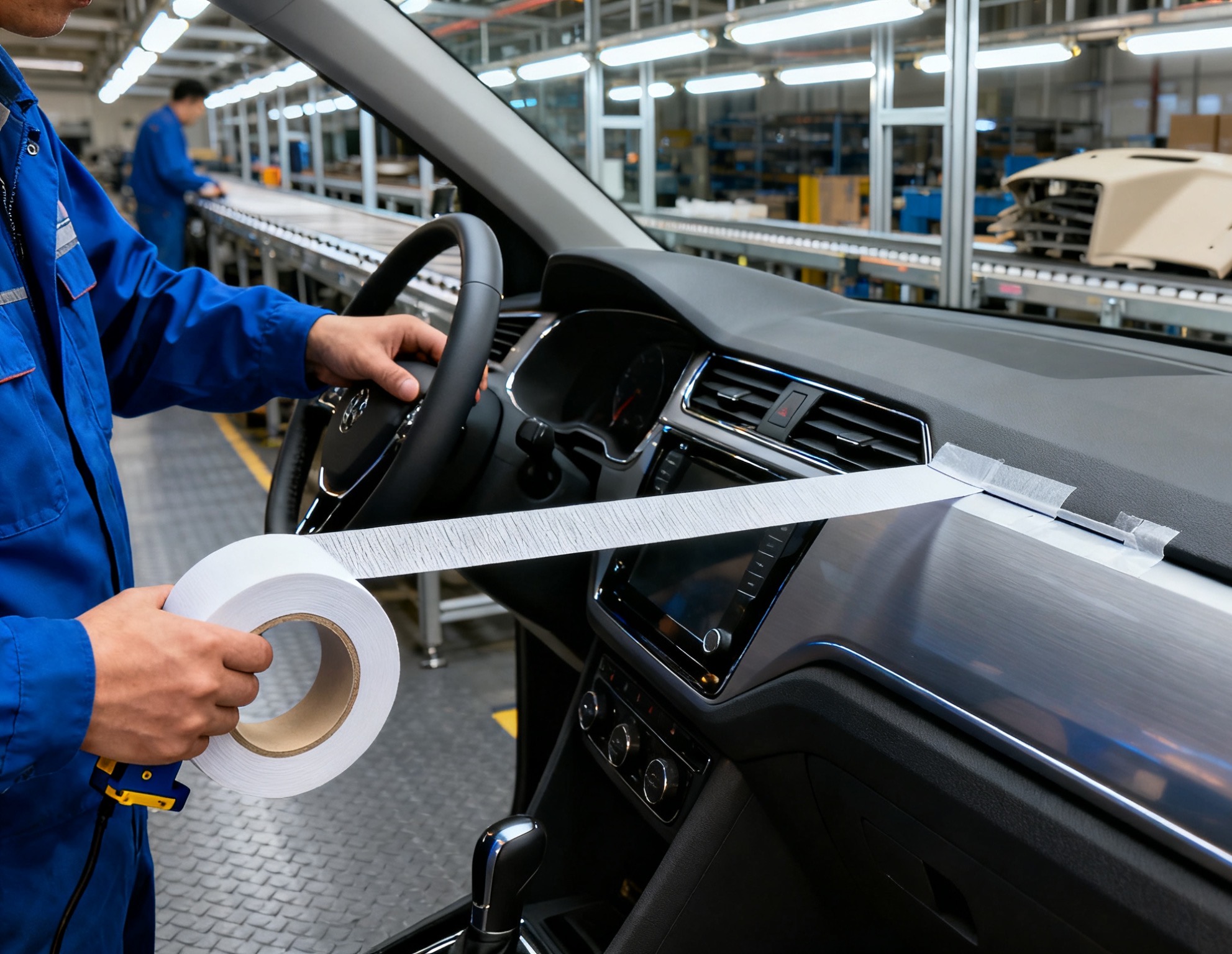
The automotive industry and the production of special equipment use foam tapes for soundproofing interiors and sealing headlights. The specificity here is working in conditions of constant vibrations and temperature changes from -50°C in winter to +90°C in summer under the hood. The use of standard household tapes led to their delamination and loss of properties in one season. The introduction of tapes based on modified rubber or high-temperature polyurethane foam with reinforced adhesive solved the problem. The case showed that an increase in the budget for materials by 15% increased the service life of the unit by 4 times, which was fully paid for by reducing warranty obligations. For such tasks, specialized solutions developed as part of OEM/ODM programs are ideal, where the properties of the adhesive are adapted to the specific operating conditions of the vehicle.
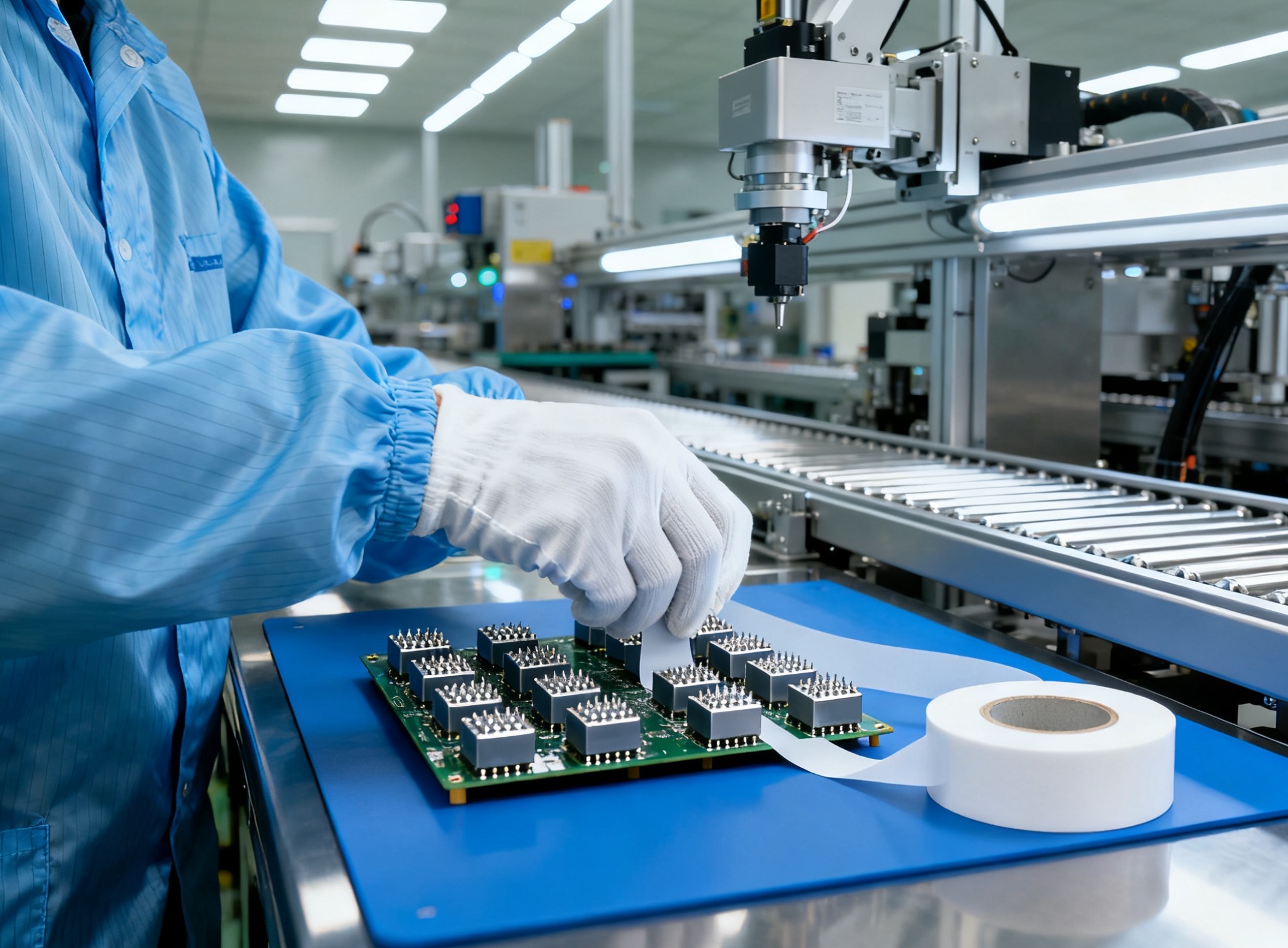
In the electrical field (control cabinets, switchgear panels), tapes serve as a barrier against dust of class IP54 and higher. A mistake many designers make is using open-cell tapes (regular PU foam) without lamination. Dust penetrates the material, settling on the contacts. Replacing it with closed-cell PPE or aluminum-coated polyurethane foam provided the required protection class. In addition, such tapes have shielding properties (in the presence of a conductive layer), which is important for sensitive electronics. The correct selection of material here prevents short circuits and equipment failures.
The general conclusion from all cases: there is no universal solution. What is cheap and works well in furniture packaging will perform disastrously poorly in a car. Analysis of operating conditions and selection of specialized material is the only way to real savings. Don't be afraid to pay more for the right material if it means the product will last longer.
Action:Conduct an audit of current belt applications in your production and compare the material with actual operating conditions (temperature, environment, loads).
How to order directly from the factory: logistics, terms and minimum quantities
Purchasing directly from the manufacturer provides access to prices 20–40% below market prices, but requires an understanding of the interaction processes. The first step is to determine the Minimum Quantity Quantity (MOQ). For standard sizes (10-50mm width), factories typically set an MOQ of 50 to 100 rolls per item. If you need less, the factory may offer a service to consolidate the order with other customers or sell the remaining stock at a slightly higher price, but still cheaper than the dealer. For non-standard cutting (eg 13mm or 27mm width), the MOQ may be higher due to machine changeovers required.
Production times depend on the load on the production line and the availability of raw materials. The standard cycle is from 3 to 7 working days. If an individual logo is required on the liner or special packaging, the period will be extended by 2-3 days. During peak seasons (March-June) the timing may extend to 2 weeks. Plan your purchases in advance, taking into account delivery times. Express production is possible, but usually incurs a 10-15% rush surcharge.
Logistics is a separate expense item. Factories are often located in industrial clusters (Moscow region, Leningrad region, Urals, China). Delivery to your warehouse is carried out by transport companies. Shipping costs are calculated based on volume and weight. You can optimize logistics by ordering a full pallet (euro truck or container). In this case, the cost of delivery per unit of production becomes minimal. We recommend cooperating with other enterprises in your region to jointly purchase a complete machine if your volumes are small.
The payment procedure also has nuances. New clients usually work on a 100% prepayment basis. After concluding a framework agreement and successful delivery of several batches, it is possible to switch to deferred payment (for example, 30% advance, 70% upon readiness for shipment). This improves the cash flow of your business. Be sure to discuss payment terms with the sales department at the start of negotiations.
An important point is the acceptance of the goods. Upon receipt of the cargo, open several random boxes directly in the presence of the transport company driver. Check the integrity of the packaging, compliance with the markings and the absence of visible defects (flattened rolls, unwinding). Reports of discrepancies drawn up at the time of acceptance are the basis for a claim against the carrier or plant. Ignoring this step robs you of the opportunity to prove transport damage.
Action:Contact the plant's sales department, request the current price list for wholesale quantities and clarify the terms of delivery to your city.
Frequently Asked Questions
What is the minimum order quantity (MOQ) to receive wholesale price?
For most factories, the minimum batch for starting wholesale prices is from 50 to 100 rolls of the same size. However, if you are ready to take an assortment matrix (of different widths and thicknesses) with a total volume of 300–500 rolls, you can qualify for individual discounts and special shipping conditions. Some manufacturers offer trial batches of 10-20 rolls at a “small wholesale” price so you can test the material before making a large purchase.
Is it possible to order tape with a non-standard width or thickness?
Yes, factories have equipment for slitting and allow you to order strip of any width in 1 mm increments (usually from 5 mm to 1200 mm). As for the thickness, it depends on the presence of the original foam sheet. Standard thicknesses (3, 5, 10 mm) are always available. Non-standard (for example, 7 mm or 12 mm) may require ordering a batch of raw materials, which will increase the production time to 2-3 weeks. Discuss technical capabilities with the plant technologist before placing an order.
Do you provide samples for testing before purchasing?
The vast majority of serious manufacturers provide free samples of 1–2 linear meters in length for testing adhesion and compatibility with your surfaces. You only pay the cost of courier delivery. This is a critical step to avoid mistakes. Never buy a large quantity without first testing a sample under the actual operating conditions of your product.
What is the shelf life of foam adhesive tapes?
If storage conditions are observed (dry room, temperature from +5°C to +25°C, no direct sunlight), the shelf life of quality tapes is 12–24 months from the date of production. After this period, the glue may lose some of its stickiness, and the base may become less elastic. Always check the production date on the packaging when receiving the product. It is not recommended to use tapes with an expiration date for critical components.
Is there a difference between white packaged tape and clear packaged tape?
The color of the packaging (liner) itself does not affect the properties of the adhesive or foam, unless it is a specialized material. White paper or PET liner is often used to improve the readability of markings or logos. The transparent liner is convenient for visual control of the position of the tape when sticking to dark surfaces. The main thing is to pay attention to the liner material (paper or film) and the quality of siliconization, and not to its color.
Conclusion and next steps
Search for an offer where you can buycheap foam adhesive tapesin 2026, requires a balance between price and quality. As we have found, the lowest price per roll often hides shortcomings in density, type of adhesive or lack of certification, which ultimately leads to higher operating costs. The real benefit is achieved when working directly with factories that can confirm their characteristics with EAC/GOST documents and offer flexible conditions for cutting and logistics.
Don't risk the reputation of your product to save pennies on consumables. Use the knowledge gained to audit current suppliers and test new samples. Remember that a reliable seal means quiet operation of your equipment and satisfied customers. If you are ready to move to a new level of supply and receive a personal commercial offer with calculation of savings for your volume,contact us today. Our specialists will help you select the optimal specification and organize delivery on time, relying on the experience of such trusted partners as Enping Sunli Adhesive LLC.
To further explore the topic, we recommend checking out our guide toselection of industrial sealantsand catalogthe entire line of mounting tapesavailable for shipment from the warehouse.