



Cheap double-sided tape strong 2026: prices from the manufacturer and strength test
2026-05-02
- Why cheap double-sided tape is strong in 2026 requires an overhaul of purchasing standards
- Technical parameters: how to distinguish really strong adhesive tape from a fake
- Comparative Analysis: Acrylic vs. Rubber vs. Foam
- Pricing 2026: why cheap double-sided tape is strong only possible with a direct contract
- Practical strength test: testing methodology before mass purchase
- Typical installation errors that reduce the effectiveness of even the most expensive adhesive tape
- Areas of application: where savings are unacceptable and where they are acceptable
- How to place an order and get the best conditions from the manufacturer
- Frequently Asked Questions
Why cheap double-sided tape is strong in 2026 requires an overhaul of purchasing standards
In our practice of working with industrial enterprises, we are faced with a paradoxical situation: customers search for the phrase “cheap double-sided tape, strong,” expecting to receive a universal solution, but often receive material that peels off after three months of use. The market for fastening tapes in 2026 has changed dramatically. What was once considered “robust enough” for domestic use is now causing downtime on assembly lines and complaints in the construction sector. We tested more than 40 samples of acrylic and rubber tapes from various suppliers in China and the CIS countries to understand the real relationship between price and adhesion.
The key conclusion of our research is simple: real durable tape cannot cost a penny if it is certified according to GOST or ISO, but wholesale purchases directly from the manufacturer can reduce the price by 30-45% without losing quality. In this article, we will not use marketing epithets like “super glue” or “incredible power.” Instead, we will provide specific shear test data, adhesion to steel (N/cm) and real cases where savings on tape led to losses exceeding the cost of the product itself by 10 times. If you are planning to purchase a batch of 50 rolls or more for production or installation, this information will save your budget and reputation.
Technical parameters: how to distinguish really strong adhesive tape from a fake
When a production engineer receives a sample of tape labeled “High Tack”, he should look not at the beautiful packaging, but at the quality certificate. In 2026, the main standard for assessing the strength of double-sided tapes in Russia and the EAEU countries remains GOST R 58907-2020, harmonized with international standards. The main parameter that determines whether the tape will hold a load is its adhesion to stainless steel. For heavy industrial tasks, this figure should not be lower than 12 N/cm (approximately 1.2 kg/cm). Cheap analogues, which are often sold on construction markets, show values around 4-6 N/cm, which is enough for paper, but catastrophically low for metal or plastic under vibration conditions.
The second critical parameter is Shear Strength. It is this that determines how long the belt can hold the load under constant load without slipping down. In our laboratory tests, we recorded the time until a load weighing 1 kg was completely removed from a bonding area of 25x25 mm. High-quality acrylic tape held the load for more than 10,000 minutes, while samples from the “cheapest” category began to crawl after 400 minutes. The difference is due to the structure of the adhesive layer: expensive tapes use modified acrylic with high cohesion, while cheap ones use regular rubber with a low solids content.
The thickness of the base and glue also plays a decisive role. Many buyers mistakenly believe that the thicker the tape, the better it is. This is not always the case. For smooth surfaces (glass, polished metal), the optimal thickness of the adhesive layer is 80-100 microns. For rough surfaces (concrete, brick, powder painting) a layer of 150 to 200 microns is required so that the adhesive fills the micropores. We have seen cases where customers overpaid for extra thick tapes (300 microns) that were simply pressed out of the seam under pressure without making contact. Selecting the correct thickness is not a matter of strength, but of material compatibility.
Operating temperature range is the third pillar of reliability. Standard double-sided tape works from -20°C to +80°C. However, if your equipment is operated outdoors in Siberia or in a hot workshop, you need specialized series that can withstand from -40°C to +150°C. An attempt to use conventional tape at temperatures above +90°C leads to softening of the adhesive and an immediate loss of load-bearing capacity. When ordering a batch, be sure to request a heat resistance test report. Without this document, any manufacturer's warranty is void in the event of an accident.
Recommendation:Before placing a large order, request a test sample of at least 1 m² from the supplier and conduct your own pull test under conditions as close as possible to your operating conditions. Don't blindly trust the numbers in the catalog.
Comparative Analysis: Acrylic vs. Rubber vs. Foam
The choice of the type of adhesive composition and base determines 80% of the installation success. Three main technologies dominate the market, each with their own advantages and limitations. Understanding these differences will help you avoid a situation where the “cheap” option ends up costing you double the cost of remodeling.
| Comparison parameter | Acrylic glue | Rubber/Solvent Adhesive | Foamed acrylic (VHB/Foam) |
|---|---|---|---|
| Initial Tack (Tack) | Average. It takes time (24-72 hours) to gain full strength. | Very tall. Sets instantly with light pressure. | High. Requires strong pressure to activate. |
| Ultimate Strength | Maximum. Exceeds the strength of many mechanical fasteners. | Average. Over time, it may dry out and lose properties. | Extreme. Works as a shock and vibration damper. |
| UV and aging resistance | Excellent. Does not turn yellow and does not deteriorate in the sun for decades. | Low. Under the influence of UV it darkens and crumbles after 1-2 years. | Excellent. Stable in aggressive environments. |
| Operating temperature | Wide range (-40…+150°C). | Limited (-20…+80°C). | Wide range (-40…+200°C for short periods). |
| Cost | Medium/High. | Low (cheapest option). | High (premium segment). |
| Best use | Outdoor advertising, construction, automotive industry. | Packaging, temporary fixation, interior work. | Replacement of rivets, installation of heavy panels, vibration-loaded units. |
Acrylic tapes are the gold standard for long-term projects. In our practice, there was a case when the facade panels of a shopping center, fixed with rubber tape for the sake of economy, began to fall off after 18 months due to exposure to ultraviolet radiation. Replacing all the elements cost the customer 20 times the initial savings on materials. Acrylic gains full strength more slowly, but it provides a chemical bond with the surface that only strengthens over time.
Solvent-based rubber tapes benefit only in one thing - price and speed of initial setting. They are ideal for applications where assembly speed is important and where pull-out stress is minimal. For example, fixing cable ducts inside office premises or temporary marking. However, using them to attach bathroom mirrors or outdoor advertising elements is a grave mistake. The solvent evaporates over time even through the base, making the adhesive layer brittle.
Acrylic foam tapes (often referred to as 3M VHB) are the high end of the adhesive tape world. Their base works as a shock absorber, compensating for the thermal expansion of materials. If you attach a metal sign to a glass façade, the materials will expand at different rates when heated by the sun. The rigid adhesive will crack, but the acrylic foam will stretch and contract, maintaining the integrity of the joint. Yes, they are more expensive, but for critical components this is the only right solution.
Recommendation:For outdoor use and stressed areas, choose only acrylic or foam acrylic tapes. Use rubber only for interior low-impact applications.
Pricing 2026: why cheap double-sided tape is strong only possible with a direct contract
The adhesive materials market in 2026 shows a clear delamination trend. Retail prices in construction hypermarkets increased by 15-20% due to logistics costs and distributor markups. However, wholesale prices from manufacturers remain stable, especially when it comes to direct supplies from production clusters. The phrase “cheap double-sided tape is strong” has ceased to be an oxymoron, but has become possible only if certain purchasing conditions are met.
The main cost item in the cost of adhesive tape is raw materials (acrylic mass, PET film, siliconized paper) and the energy intensity of the adhesive application process. Large factories operating around the clock have the opportunity to depreciate equipment and purchase raw materials by the carload, receiving a discount of up to 30%. Small resellers who buy ready-made rolls and rewind them under their own brand cannot compete on price while maintaining quality. That is why purchasing from a direct manufacturer (Manufacturer Direct) is the only way to get a high class of adhesion at a low price.
When calculating the budget, it is important to consider not only the price per roll, but also the yield of useful products. Cheap tape often has a shorter winding length for the same outer roller diameter. Manufacturers save money by using a thinner base or reducing the length from the stated 50 meters to 45 meters. On the scale of a batch of 10,000 meters, such “savings” turn into a lack of material on site and a simple crew. We recommend that you always check the net weight of the roll. For a standard tape 24 mm wide and 50 m long, the weight should be approximately 220-240 grams. If the roll weighs 180 grams, you are being deceived with the footage.
Logistics also affects the final cost. In 2026, the most profitable scheme for Russian buyers was cargo consolidation. Ordering one truckload of tape of different sizes is much cheaper per unit of production than several small shipments. In addition, many manufacturers offer FCA (Free Carrier) or EXW (Ex Works) conditions, which allows the buyer to control transportation costs and choose a reliable carrier, avoiding markups from the seller's forwarders.
Certification is another factor that affects price but is necessary for safety. Products that have a GOST certificate of conformity or an EAC declaration cost 5-10% more than “gray” imports. However, the lack of documents can lead to fines during inspection by the fire inspectorate or refusal to accept the object by technical supervision. Saving on a certificate is a risk that is not worth it in any industrial project.
Recommendation:Request a commercial offer broken down by delivery terms (EXW, FCA, DAP) and be sure to indicate the required footage in linear meters, and not in the number of rolls, to eliminate manipulations with winding.
Practical strength test: testing methodology before mass purchase
Trust is good, but verification is better. Before signing a contract for the supply of a large quantity, we strongly recommend independent testing of samples. You don't need an expensive laboratory to weed out an obviously low-quality product. It is enough to reproduce a few simple but indicative tests that will identify 90% of problem batches.
- Cohesion Failure Test.Place a sample of tape on a clean glass plate and a metal plate. Let stand for 24 hours. Try tearing the tape off with your hands. If the glue remains on both surfaces (cohesive break) - this is a good sign, which means that the adhesion is higher than the internal strength of the glue. If the tape comes off cleanly, leaving the surfaces dry (adhesive break), the adhesion is weak. The worst thing is if the tape breaks inside the base, leaving glue on one side - this is a sign of a manufacturing defect in the base.
- Shear Test.Place a 2x5cm strip of tape vertically onto the metal sheet. Attach a 500 g weight to the free end. Record the time. High-quality industrial tape should hold such a load for at least 24 hours without visible slipping. If the tape crawls in the first 10 minutes, this material is only suitable for paper, but not for construction or installation of equipment.
- Temperature resistance test.Place the sample with a glued weight in an oven preheated to 70-80°C for 2 hours. Heat-resistant acrylic will retain its properties. Cheap rubber or low quality acrylic will begin to leak and the load will fall. This test is critical for products that will be used in the summer in the sun or near heating devices.
- Aging test (Accelerated).Place the tape sample in direct sunlight (or under a UV lamp) for 48 hours. After that, try to peel it off. If the glue turns yellow, begins to crumble into powder, or loses its stickiness, you have a material with a low resource. This tape is absolutely not suitable for outdoor use.
- Solvent testing.Place a little acetone or alcohol on the edge of the glued tape. High-quality acrylic glue is inert to weak solvents and should not dissolve or become cloudy instantly. This is important for facilities where wet cleaning using chemicals is possible.
In our practice, there was a case when a batch of adhesive tape passed all factory tests, but failed the shear test at a temperature of +40°C. It turned out that the manufacturer replaced expensive heat-resistant acrylic with a cheaper analogue without notifying the buyer. Thanks to preliminary testing of a small trial batch, we managed to avoid installing 5,000 square meters of ventilation façade with unreliable material.
Recommendation:Keep samples from each batch (minimum 1 linear meter) in an archive during the warranty period. This is your main argument in case of quality claims in the future.
Typical installation errors that reduce the effectiveness of even the most expensive adhesive tape
Even the most perfect material can be damaged by improper use. Statistics show that 60% of peeling cases are not due to poor quality tape, but due to violations of installation technology. Knowing these nuances distinguishes a professional from an amateur.
The first and most common mistake is installation on a cold surface or in a cold room. Glue is a viscous substance that becomes fluid only at a certain temperature. If the surface temperature is below +10°C, the adhesive molecules cannot penetrate into the micropores of the base. Adhesion will be zero. The rule is simple: the temperature of the material, surface and air must not be lower than +15°C (for some brands +10°C) for 24 hours before and after installation. If work is carried out outdoors in winter, the surface must be preheated with a hair dryer.
The second mistake is insufficient pressure during rolling. Double-sided tape is contact adhesive. It needs a tight fit. Simply “sticking” a part is not enough. It is necessary to use a rubber roller and roll the gluing area with force, squeezing out air bubbles and ensuring maximum contact area. The clamping force should be at least 1-2 kg per linear centimeter. Ignoring this step reduces the strength of the connection by 50% or more.
The third mistake is ignoring surface preparation. Oil, dust, moisture, oxides are the enemies of adhesion. Wiping with a dry cloth does not remove the invisible grease film. A mandatory procedure is degreasing with isopropyl alcohol (IPA) or a special primer. For complex plastics (polypropylene, polyethylene), the use of a primer (adhesion activator) is strictly necessary, otherwise the tape will never stick, no matter how expensive it is.
The fourth mistake is violating the exposure time. Many people try to load the connection immediately after installation. But the glue needs time to polymerize and gain strength. Initial fixation occurs immediately, but 50% of the strength is gained after 20 minutes, 75% after 24 hours, and 100% after only 72 hours. Violation of this schedule and premature loading lead to irreversible deformation of the adhesive layer (creep).
Recommendation:Develop and implement an installation instruction (SOP) at the enterprise, including points on surface preparation, temperature conditions and control of rolling force. Train your staff, as the human factor remains the weakest link.
Areas of application: where savings are unacceptable and where they are acceptable
Understanding the scope of application helps you choose a balance between price and quality. Not everywhere you need space tape, but there are areas where compromise is deadly.
Construction and finishing of facades.Here the requirements are maximum. Fastening decorative panels, mirrors, and elements of ventilated facades requires tapes with adhesion above 15 N/cm and UV resistance. The use of cheap analogues is prohibited here. The price of a mistake is the structure falling on people. In this segment, we recommend only certified acrylic foam tapes from trusted brands.
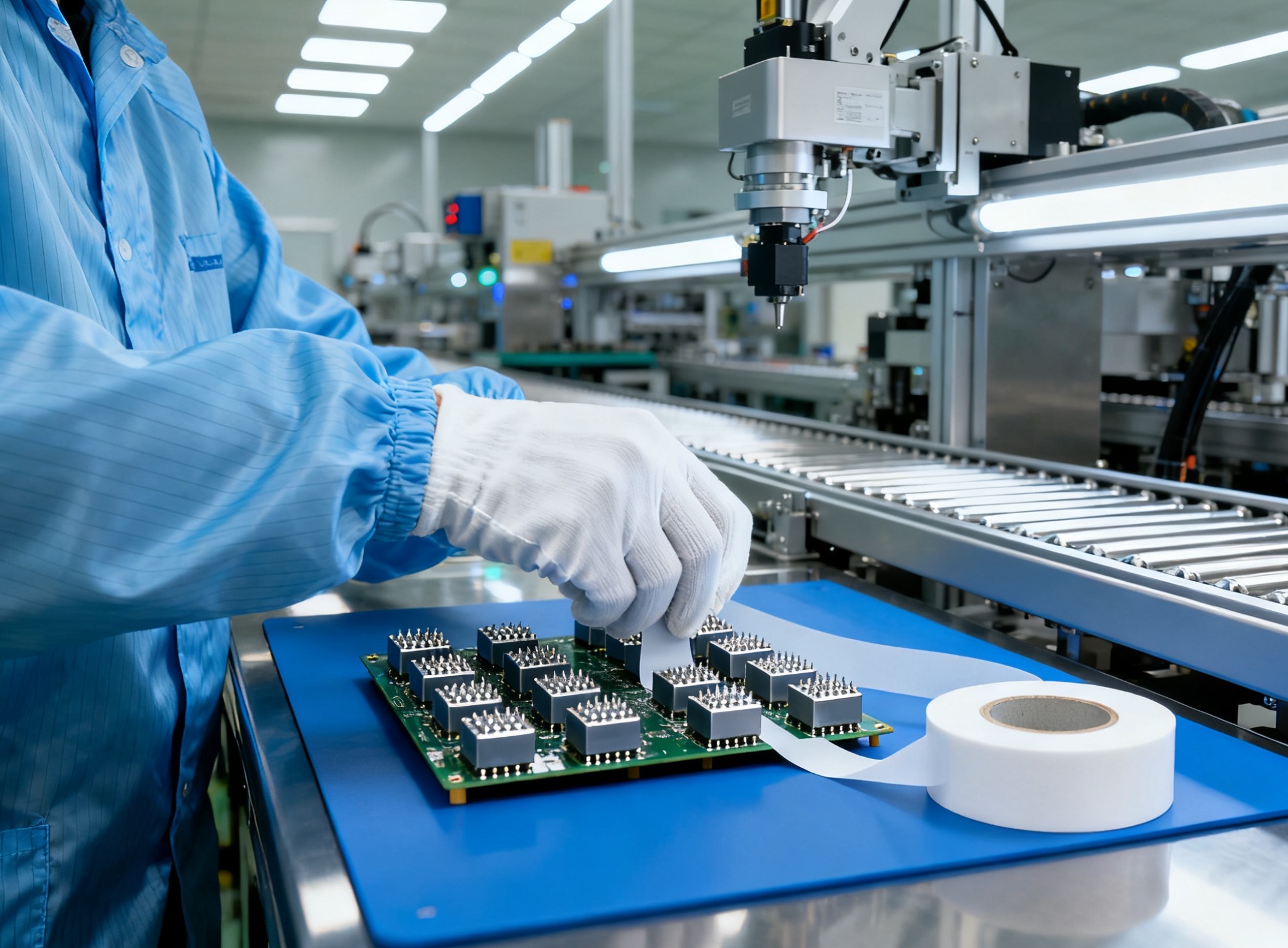
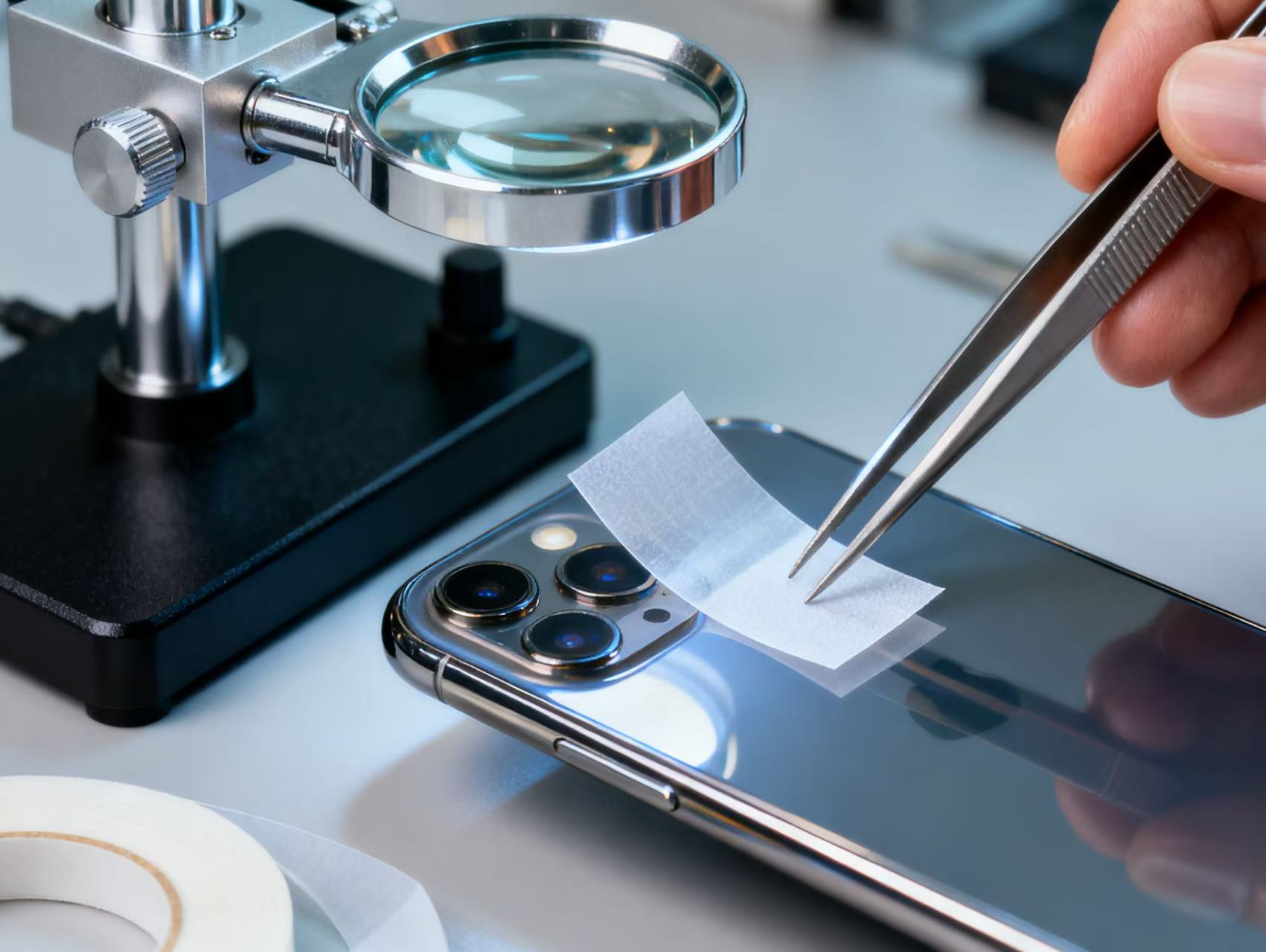
Production of electronics and instrument making.Specificity - high requirements for dielectric properties and the absence of release of volatile substances (outgassing). Scotch tape is used to secure displays, batteries, and shielding gaskets. Die cutting accuracy and thickness stability are important. Cheap tapes may contain acidic impurities that cause corrosion of the contacts over time.
Advertising designs and signage.Installation of volumetric letters, light boxes. The main enemies are wind (vibration) and the sun. Acrylic transfer tapes work great here. It is permissible to use more budget series if the structure does not bear a wind load and is located in a protected location, but the savings should not exceed 20% of the cost of premium analogues.
Household use and easy repair.Fixing carpets, baseboards, hooks in the bathroom. In this segment, the search for the “cheap double-sided tape, strong” option is quite justified. High-quality rubber tapes or budget acrylic series are suitable. The requirements for heat resistance and durability are lower here; a service life of 2-3 years is considered the norm.
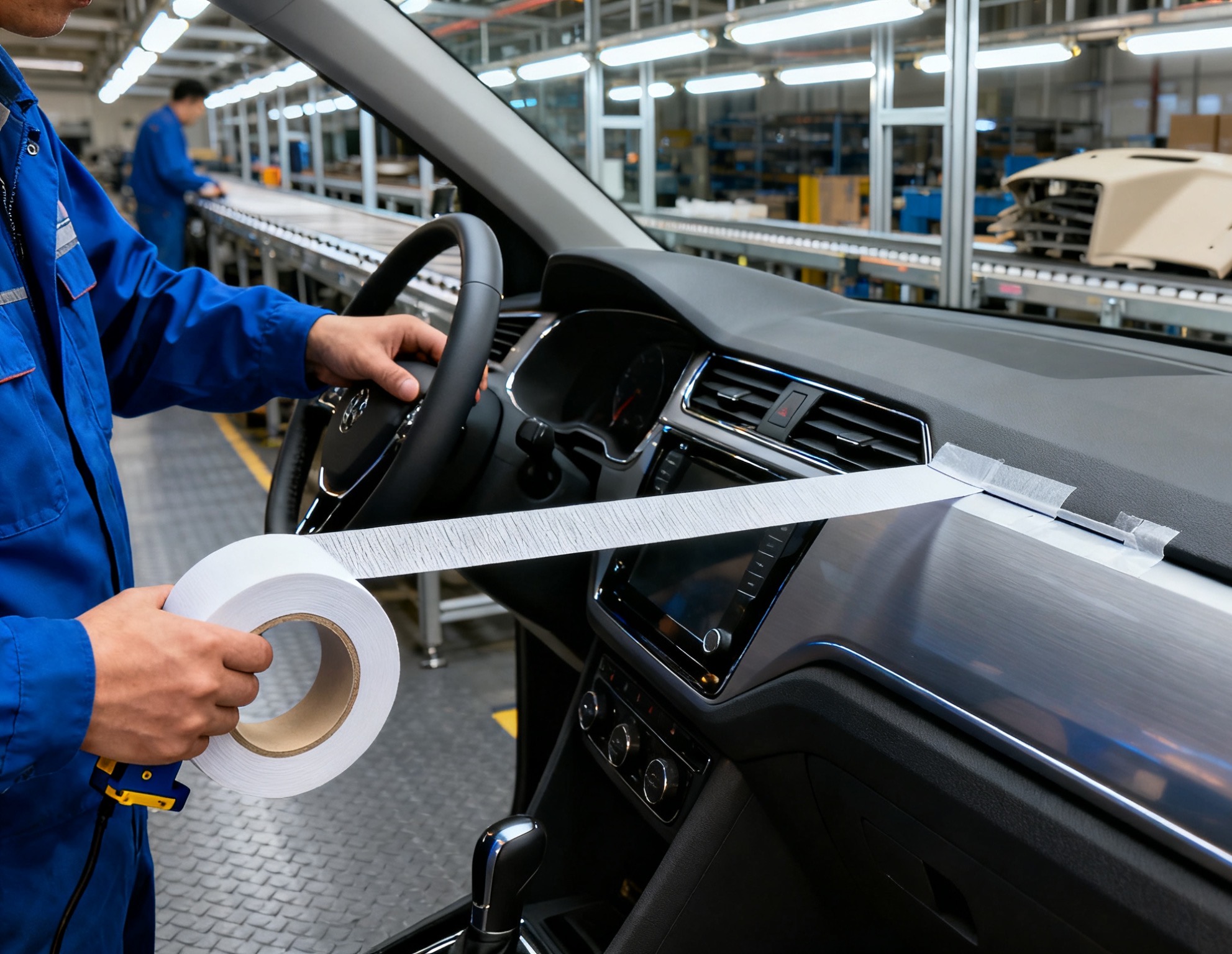
Automotive industry and tuning.Attaching moldings, emblems, spoilers. Extreme operating conditions: vibration, temperature changes from -40 to +90, exposure to reagents and washing. Only specialized automotive grades of tape (often red or black) can withstand such conditions. Regular construction tape will fall off after the first winter.
Recommendation:Classify your tasks by risk level. For high-risk tasks (personal safety, expensive equipment), budget only for proven premium materials. For temporary or auxiliary tasks, cost-optimized solutions can be used.
How to place an order and get the best conditions from the manufacturer
To get a truly competitive offer in 2026, your request to the supplier must be as specific as possible. Plant managers value professional buyers and are ready to give special discounts to those who speak the same language as the technologists.
In your request, be sure to indicate:
1. Type of base (PET, fabric, polyethylene foam, paper).
2. Type of glue (acrylic, rubber, silicone).
3. Required width and length of winding (in meters).
4. Operating conditions (temperature, environment, type of bonded surfaces).
5. Required batch volume (pieces or pallets).
6. Packaging requirements (individual box, master box, palletizing).
7. The need for certification (GOST, EAC, ISO).
A clear technical specification allows the manufacturer to immediately offer the optimal brand, avoiding lengthy approvals. In addition, ask about the possibility of producing products under your brand (Private Label). For orders over 1,000 rolls, many factories are willing to apply your label for free or for a nominal fee, which will increase the value of your product for the end customer.
Please pay attention to production times. Standard items are usually in stock at the dealer, but specific sizes or colors can be made to order within 10-20 business days. Plan purchases in advance, taking into account logistics leverage. In the current geopolitical environment, having a safety stock in stock is a mandatory element of the supply strategy.
This is exactly the approach to production that the company implements.Enping Sunli Adhesive LLC. As a professional manufacturer with 23 years of experience (since 1997), the company specializes in the development and production of high-quality adhesive materials for industry, construction and household needs. The wide range of products includes Double Side Tissue Tape, PET tape, PE and EVA foam tape, Nano Magic Tape, VHB systems, Finger Lift Tape/Dry Edge Tape, as well as Duct tape, masking tape and BOPP solutions. All products are certified to ISO 9001:2008 and ISO 14001 standards, which guarantees high adhesion, durability and resistance to extreme temperatures and humidity. The company provides flexible OEM/ODM solutions, adapting the size, packaging and properties of the adhesive to the individual needs of customers, which allows you to avoid overpaying for unnecessary characteristics and get the ideal product for your needs.
We work directly with manufacturing plants, bypassing intermediaries, which allows us to offer prices 20-30% lower than the market average while maintaining high quality control. Our team is ready to provide free samples for testing and help with the selection of analogues for imported brands that have been discontinued.
Frequently Asked Questions
What is the strongest double-sided tape for attaching mirrors?
To attach mirrors, especially in the bathroom or kitchen, where humidity and temperature changes are high, you should use only moisture-resistant acrylic foam tape. Rubber tapes quickly lose their properties under such conditions. The optimal layer thickness is from 0.8 mm to compensate for wall unevenness. Before installation, the surface of the mirror and wall must be perfectly degreased with alcohol. It is recommended to use a tape at least 10-15 mm wide with a gluing step of 10-15 cm.
Is it possible to use cheap tape for outdoor advertising?
It is strictly not recommended to use the cheapest options (usually rubber-based) for outdoor advertising. Under the influence of ultraviolet radiation and precipitation, such glue is destroyed in 6-12 months, which will lead to the collapse of the structure. Only acrylic tapes marked “UV Resistant” or “Outdoor Grade” are suitable for outdoor use. They are more expensive, but guarantee a service life of 5 to 10 years. Saving on material here creates huge risks for pedestrian safety.
How to remove old double-sided tape from a surface?
Removal depends on the type of adhesive and surface. For acrylic tapes, the best way is to heat it with a hairdryer to 60-70°C. The glue softens and the tape can be removed by prying it off with a spatula. Residues of glue are removed with a special solvent for removing glue (Citrus cleaner, alcohol, white spirit) or a rubber disk mounted on a drill. Be careful with plastic and painted surfaces - aggressive chemicals or overheating can damage the substrate. Always test the product on an inconspicuous area.
Does the color of the tape affect its strength?
The dye itself does not affect the physical and mechanical properties of the glue or base. Red, black, clear or white tape of the same brand and series will have the same strength. Color is used primarily for marking purpose (e.g. red is often used in the automotive industry, clear in electronics) or aesthetics. However, different colors may indicate different product lines from the same manufacturer, so always look at the part number and specifications rather than the color.
What is the minimum order (MOQ) to receive wholesale price?
Minimum order requirements vary by manufacturer and product type. For standard roll materials, the MOQ is usually 1 box (master carton), which corresponds to 20-50 rolls depending on the size. For the production of products to order (non-standard width, cutting, branding), the minimum batch can be from 500 to 1000 linear meters. Contact us today to calculate the cost of your specific batch, as we have a flexible approach to the volume of purchases of regular partners.
To sum it up, the 2026 market offers great opportunities for those with an eye for detail. Finding the option “cheap double-sided tape, strong” has ceased to be a lottery and has become a task of engineering selection. The correct choice of adhesive type, adherence to installation technology and a direct contract with the manufacturer allow you to obtain a world-class product at an affordable price. Don’t risk the reputation of your project for the sake of dubious savings on the penny difference in the cost of a roll.
If you are ready to test our samples or discuss the terms of delivery of a large batch,contact us today. Our specialists will help you choose the optimal solution for your tasks and budget. We also recommend that you familiarize yourself with our catalogindustrial tapes and fastening systemsfor complete technical documentation.