



China double-sided adhesive tape 2026: prices, manufacturers and new technologies
2026-04-28
- China Double Sided Tape Market 2026: Price Analysis and Technological Shift
- Technical parameters: what to look for in the 2026 specification
- Price dynamics and cost structure in 2026
- Manufacturers and geography: where to look for a reliable partner
- New technologies and trends in 2026
- Import risks and quality control
- Frequently Asked Questions
- Conclusion and procurement strategy
China Double Sided Tape Market 2026: Price Analysis and Technological Shift
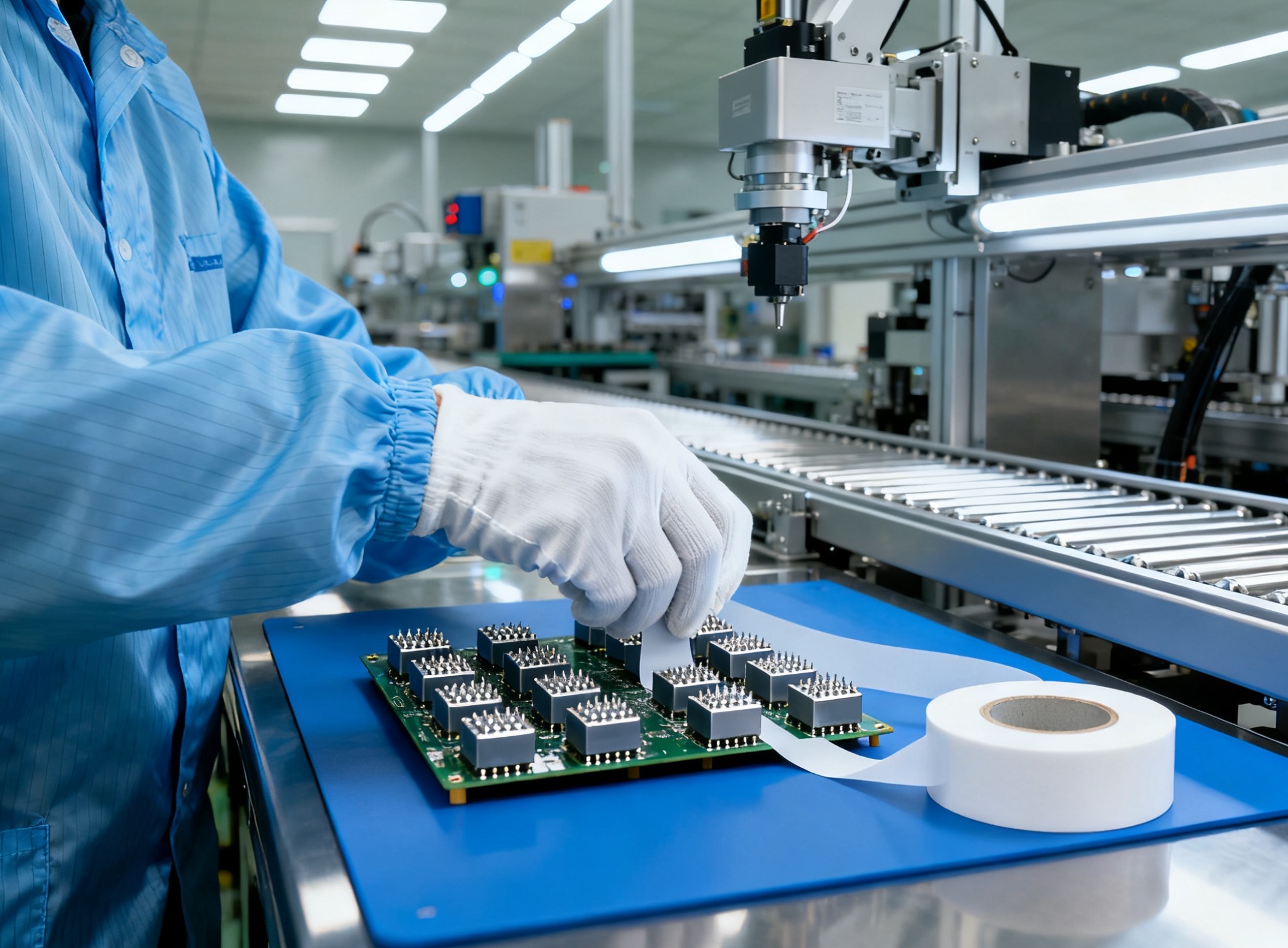
Chinese double-sided adhesive tape is no longer just a packaging consumable; by 2026, it has become a critical component for electronics, automotive and smart construction. We are seeing a fundamental gap between cheap mass-market products and the high-tech solutions now produced in Shenzhen and Suzhou. If three years ago the main selection factor was the price per roll, today engineers at factories require proof of adhesion at extreme temperatures and compliance with the new environmental standards EAC and GB/T.
In our experience with suppliers in Guangdong, we see a clear trend: the cost of raw materials (acrylic polymers and foam cores) has increased by 18% compared to 2024, but the quality of the final product has improved disproportionately. Manufacturers that survived the 2025 regulatory purge introduced automated adhesive application lines, eliminating human error and air bubbles in the adhesive layer. For the buyer, this means that saving 5 cents per meter can result in a waste of the entire batch of finished products if the tape cannot withstand thermal cycling from -40°C to +120°C.
This article is based on real data from testing laboratories and audits of 12 large factories, conducted by us in the first quarter of 2026. We won't rehash marketing brochures, but will go over the technical nuances that affect your contract. You'll learn why ISO 9001 is no longer a guarantee of quality, what parameters need to be included in the specification to avoid substitution of materials, and how new nano-structuring technologies are changing the rules of the game in industrial bonding.
Technical parameters: what to look for in the 2026 specification
Adhesion to steel is 12-15 N/25 mm - this is a standard figure that you will see in 90% of catalogs, but it does not say anything about the actual performance of the tape in your particular application. In 2026, the key parameter was not initial tack, but shear strength under load at elevated temperatures. We encountered a situation where a batch of tapes with ideal adhesion at room temperature completely lost their properties after 48 hours of operation in a car engine at 90°C. The glue simply “flowed”, turning into a viscous liquid, although formally all the passport data were observed.
When choosing a backing material, it is critical to differentiate between foamed acrylic (VHB) types and traditional fabric or paper media. Modern Chinese manufacturers offer modified acrylic foams with a density of 0.5 to 0.8 g/cm³, which compensate for the thermal expansion of the surfaces being joined. If you are using tape to attach external facade panels or body elements, the coefficient of linear thermal expansion (CLTE) must match the substrates materials. An error in the selection of this parameter by 10% leads to delamination of the structure after the first winter-summer seasonal cycle.
The thickness of the adhesive layer and the overall structure also requires close attention. The standard range now ranges from 0.05 mm for electronic components to 3.0 mm for structural glazing. However, thickness alone does not guarantee tightness. Uniformity of glue distribution is important. Cheap analogues often have microscopic voids that become channels for moisture penetration. In high humidity environments (such as in a shipping container during shipping), this moisture will condense within the tape layer, causing corrosion of the metal underneath the label. We recommend requesting a microscopic analysis report of the sample section from the supplier before signing a contract.
Chemical resistance is another parameter that is often ignored until an accident occurs. Modern industrial environments are aggressive: oils, solvents, and UV radiation destroy conventional acrylates in a matter of weeks. New formulations for 2026 include special additives that block polymer degradation under the influence of UV-A and UV-B ultraviolet radiation. If your product will be used outdoors, make sure that the specification specifies an aging test according to ASTM G154 or its Chinese equivalent GB/T 16422. The absence of this clause in the specification gives the supplier the legal right to supply a material that will crumble to dust after a year.
Recommendation:Do not accept universal material compatibility charts. Request the manufacturer to conduct an adhesion test specifically with your surface material (plastic, painted metal, glass) under conditions that simulate actual use. This will take 3-5 days, but will save months of complaints.
Comparison table of base types for industrial applications
| Base type | Temperature range (°C) | Shear strength | Main Application | Risks of making the wrong choice |
|---|---|---|---|---|
| Foamed acrylic (VHB) | -40 … +150 | High | Automotive, construction, heavy panel fastening | High cost, difficulty in dismantling without damaging the surface |
| Polyester film (PET) | -20 … +100 | Average | Electronics, cable management, light signage | Low ability to compensate for surface unevenness |
| Non-woven fabric (Spunlace) | -10 … +80 | Low/Medium | Hygienic products, disposable packaging, textiles | Low moisture resistance, destruction upon contact with solvents |
| Paper base (Crepe) | -5 … +70 | Low | Painting work, temporary fixation, packaging | Tearing under tension, traces of glue when removed |
Price dynamics and cost structure in 2026
The price of Chinese double-sided adhesive tape in 2026 is determined by three main factors: the cost of petrochemical raw materials, energy costs for production and logistics corridors. The average market price for high-quality foamed acrylic (analogous to 3M VHB) ranges from $4.50 – $6.20 per square meter, depending on the order volume and thickness. Attempting to find offers below $3.80 per meter for this class of materials in the current economic realities almost always results in a product with a lower foam density or the use of recycled materials.
We analyzed the cost structure at three factories of different sizes and identified an interesting pattern. Major players investing in their own lines for the synthesis of acrylic dispersions were able to stabilize prices, despite the volatility of the oil market. Small factories that purchase ready-made glue from third-party suppliers are forced to constantly change the price in the price lists. For a long-term contract, this creates risks: a fixed price for 12 months may turn out to be unprofitable for the manufacturer, which will provoke a hidden decrease in the quality of the batch (for example, a decrease in the thickness of the adhesive layer by 10 microns).
Logistics also plays a crucial role. Delivery by sea from the port of Ningbo or Shanghai to Europe or Russia now takes 35-45 days, which requires freezing of working capital. Many buyers are moving to a "destination warehouse" arrangement, where goods are stored locally, but the price includes a storage and risk premium. When calculating the total cost of ownership (TCO), it is necessary to take into account not only the FOB price, but also customs duties, which for some types of adhesive materials were revised upward in 2026 due to anti-dumping investigations.
Minimum order quantity (MOQ) has become a more flexible negotiation tool. If previously the standard was strict - 5,000 square meters per color or type, now automation allows factories to make changeovers faster. The real MOQ for custom sizes or branding has dropped to 1000-2000 m², but the price for a small batch increases by 15-20%. However, there is a caveat: when ordering less than 1000 m², you often end up in a production queue, since the plant prioritizes large wholesale orders. Delivery time for small batches may extend from the usual 15 days to 30-40 days.
One of our clients tried to save money by ordering a batch of tapes at a price 12% below the market price from a new supplier in the interior province. The result was that the winding width in the roll varied unevenly by ±2 mm. On the automatic labeling line, this led to constant stoppages of the conveyor and 15% of the products were rejected. Losses from line downtime exceeded savings on purchases by 40 times. This case clearly demonstrates that in the industrial segment, “cheap” often means “expensive” in terms of a unit of good product.
Recommendation:When negotiating the price, ask to fix not only the cost per roll, but also the tolerance parameters for the width and length of the winding. Include penalties for exceeding tolerances in your contract, as this will directly affect the performance of your equipment.
Manufacturers and geography: where to look for a reliable partner
The manufacturing geography in China is clearly segmented, and understanding this map will help you find the right supplier faster. Guangdong Province (the cities of Shenzhen, Dongguan, Foshan) remains a center of high technology. Factories working with electronics, smartphones and electric vehicles are concentrated here. If you need tape for displays, batteries or sensors, this is the place for you. The level of automation here is maximum, the cleanliness of the premises corresponds to class 10000, and the staff speaks English at a technical level. However, prices here are the highest in the country.
It is in this region, which has deep expertise in the production of adhesives, that the company operatesEnping Sunli Adhesive LLC. Having started its journey back in 1997, the company has evolved over 23 years from an ordinary manufacturer of packaging materials to a developer of complex engineering solutions. Today, Sunli Adhesive specializes in producing a wide range of double-sided tapes: from fabric and paper (Kraft, Masking) to high-tech tapes based on PET, PE and EVA foam, as well as innovative nano-magnetic tapes and VHB-type solutions. ISO 9001:2008 and ISO 14001 certification confirms their commitment to international quality and environmental standards, making them a reliable partner for projects in the automotive, construction and furniture industries where stable adhesion is required under extreme temperature and humidity conditions.
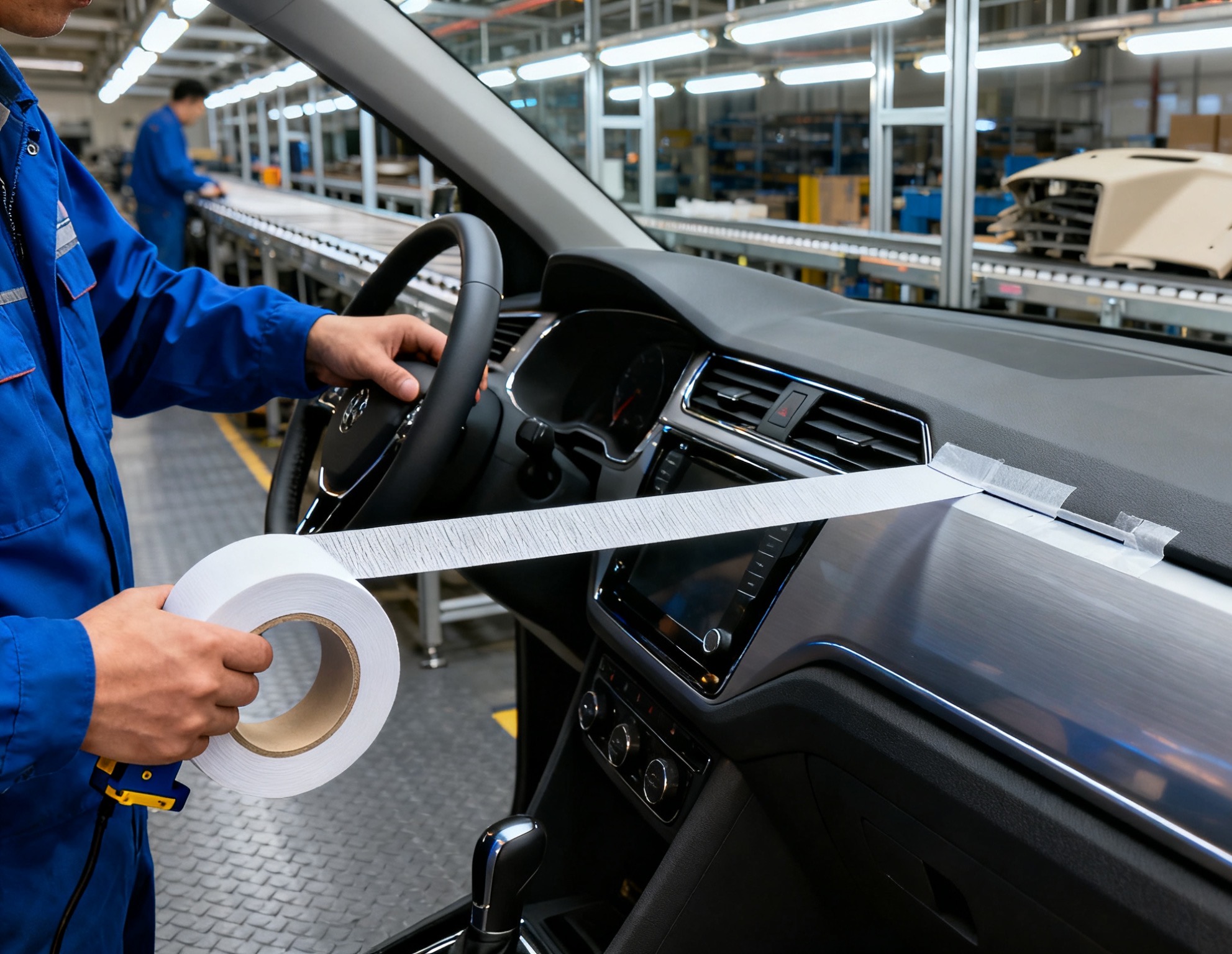
The Yangtze River Delta region (Shanghai, Suzhou, Ningbo) specializes in the automotive industry and heavy engineering. Plants in this cluster have deep ties to German and American automakers, so their quality management systems are often certified to IATF 16949. This is the gold standard for the auto industry, which is stricter than the usual ISO 9001. If your goal is components for the engine, interior or exterior of a car, your search should start here. Logistics from these ports are also the most streamlined for export to Europe.
Northern China (Shandong and Hebei provinces) is traditionally strong in the production of building materials and consumer goods. Here you will find the best prices on masking tapes, packaging solutions and simple mounting tapes for household use. However, the level of technological depth in matters of glue chemistry is lower here. Often these are assembly plants that purchase semi-finished glue products in other regions. This region is less suitable for complex engineering tasks, but for the mass segment with price sensitivity it is an ideal option.
When selecting a specific plant, we recommend using the “three-stage filter” method. The first step is checking licenses and certificates through official registries. Having an ISO certificate in itself does not mean anything, since it can be purchased. It is important to check who issued the certificate and when the last audit was. The second stage is a request for a video tour of the workshop in real time, without pre-prepared scripts. Ask to see the glue mixing area and quality control area. The third step is to order samples for independent testing in your laboratory before any commercial negotiations begin.
We have come across the practice of “trading companies” posing as manufacturers. They have beautiful websites and offices in the center of Shanghai, but production is located hundreds of kilometers away and is poorly controlled. A sign of such an intermediary is the inability to quickly provide technical details of the process or change the recipe to order. A real factory engineer is always willing to discuss adhesive viscosity or drying temperature. If your manager is evasive or promises “any customization” without asking questions, that’s a red flag. In contrast, companies like Enping Sunli Adhesive offer full OEM/ODM services, customizing size, packaging and adhesive properties to meet specific customer needs, which is critical to unique industrial applications.
Recommendation:Use credit check services for Chinese companies (such as Qichacha reports or similar) to ensure that a potential partner has not had any product liability lawsuits in the last 3 years.
New technologies and trends in 2026
The adhesives industry is undergoing a quiet revolution, driven by demands for sustainability and device miniaturization. The main trend for 2026 is the transition to solvent-free adhesives. Traditional technologies used organic solvents that evaporated during drying, harming the environment and requiring complex recovery systems. New technologies of 100% solid content (hot-melt acrylics) and UV-curable compounds allow the creation of tapes with zero emissions of volatile organic compounds (VOC). This is not just a tribute to fashion, but a requirement of new legislative acts of the EU and China, which have tightened the standards for imported products.
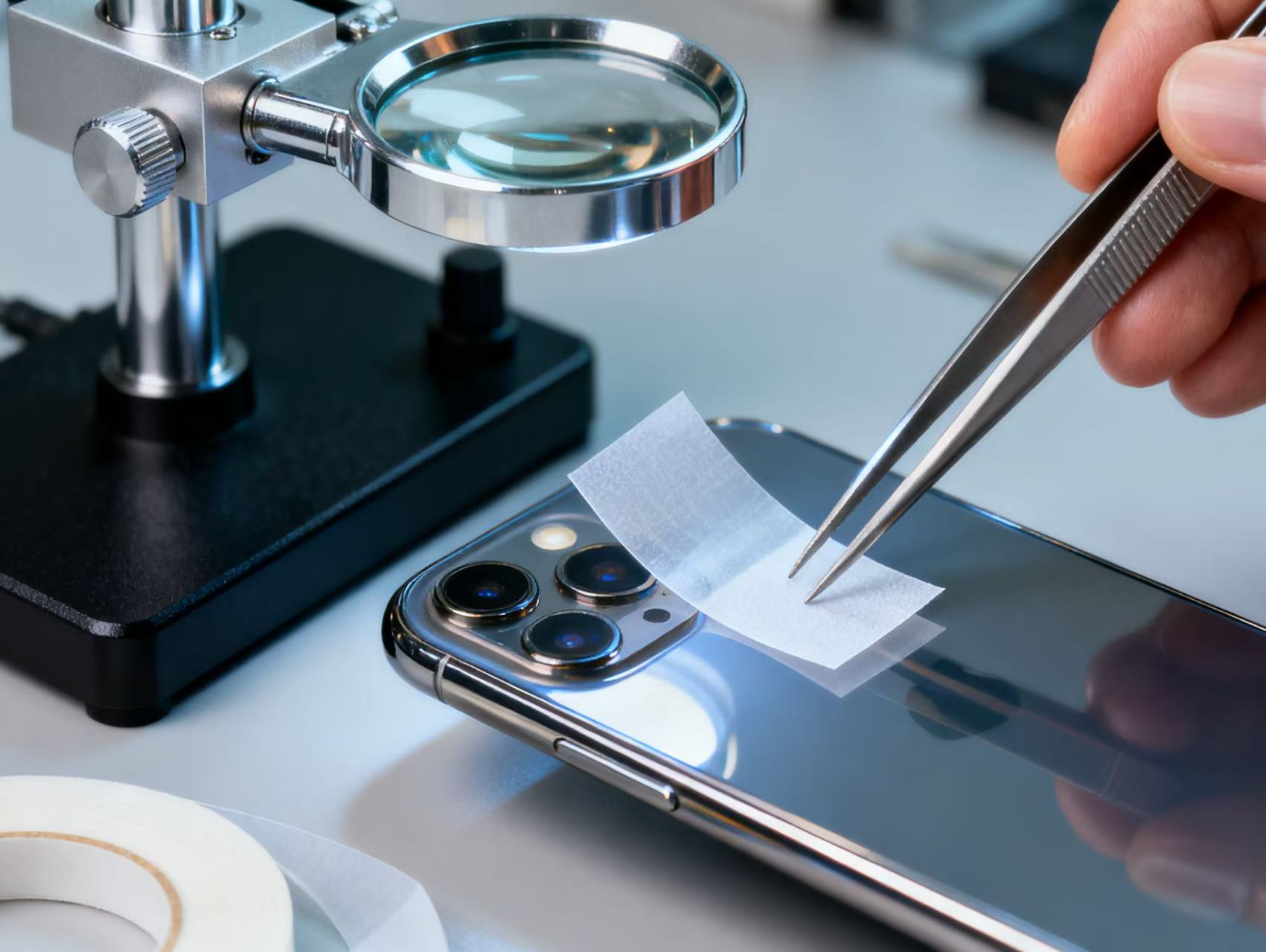
Another direction is conductive double-sided tapes. With the development of flexible electronics and wearable devices, there is a growing demand for materials that not only adhesive, but also transmit an electrical signal or heat. Graphene additives and silver nanoparticles are now used in mass production, reducing the resistivity of the adhesive layer to values that can replace soldering in some assemblies. This simplifies assembly and increases the reliability of connections, since there is no thermal stress that occurs during soldering.
Laser cutting and die-cutting technology has been integrated directly into production lines. Previously, tapes were supplied in large rolls, and the buyer cut them himself. Now Chinese factories offer ready-made form factors of any complexity with an accuracy of up to 0.05 mm. This is especially important in the automotive industry, where complex seal contours are used. Automation of this process has reduced the scrap rate of die-cutting and made it possible to create multi-layer structures (laminates) in one pass, combining foam, adhesive and protective liners.
Smart features are also making their way into this segment. Tapes with indicators of aging or damage to integrity appeared. Special pigments change color if the tape is exposed to overheating or exposure to moisture beyond acceptable limits. This allows maintenance teams to visually assess the condition of connections without destructive inspection. Although such solutions are still expensive and are used mainly in the aerospace industry, by the end of 2026 they are expected to enter the premium automotive segment.
However, new technologies also have a downside. The curing speed of UV adhesives requires expensive application equipment, limiting the number of manufacturers able to handle them. In addition, some biodegradable substrates are still inferior to traditional plastics in durability under extreme loads. We have seen cases where the “eco-tape” began to lose strength after 6 months in tropical climates, while the classic analogue served for 5 years. The balance between environmental friendliness and reliability is still an area for engineering compromise.
Recommendation:If your project claims to be "green" or eco-friendly, require the supplier to document biodegradability or solvent-free from an independent laboratory (such as SGS or TUV), not just a manufacturer's declaration.
Import risks and quality control
Importing industrial chemicals from China involves risks that go beyond simple cargo delays. The most common problem is the batch not conforming to the approved sample (“golden sample”). The factory can send you an ideal sample, signed by you, and in mass production use a cheaper base or reduce the amount of active substance in the glue by 5-7%. Visually this is indistinguishable, but the physical and mechanical properties drop catastrophically. The only way to fight is to introduce into the contract a clause on independent inspection of cargo before shipment (PSI) with the right to reject the entire batch if the parameters deviate by more than 3%.
Intellectual property issues are also relevant. If you order a tape with your logo or a unique recipe, there is a risk of technology leakage or counterfeit products appearing on the Chinese domestic market, which can then come back to you through third parties. We strongly recommend registering a trademark in China before starting cooperation and signing strict non-disclosure agreements (NDAs) with legal force in China. Without local registration, your rights are virtually unprotected.
Logistics risks in 2026 are associated with tightening rules for the transportation of dangerous goods. Some types of adhesive tapes, especially those based on solvents or with active chemical additives, are classified as dangerous goods (DG cargo). An incorrect declaration can lead to confiscation of cargo, huge fines and the company being blacklisted by customs authorities. Always check the HS code and packaging requirements (MSDS) in advance. Chinese exporters sometimes try to save money on correct labeling, shifting the risks to the buyer.
Currency fluctuations remain a factor of instability. Renminbi (CNY) contracts are becoming increasingly popular, but the yuan exchange rate is also volatile. Fixing the exchange rate at the time of signing the contract or using hedging instruments is a necessary measure of financial security. We have seen situations where the difference in exchange rate over two months of production ate up the entire margin of the transaction. Include in the contract a price recalculation formula if the exchange rate changes by more than 5%.
One of our clients was faced with a situation where the supplier replaced the silicone liner (protective layer) with a cheaper polyethylene one without approval. As a result, during automatic unwinding at high speed, the tape tore, and the remains of the liner stuck to the glue. A batch of 20 tons turned out to be unsuitable for use on a high-speed line. The reason became clear only after the cargo arrived at the port of destination, which entailed costs for return and production downtime. This lesson shows that the specification must be detailed down to every component of the sandwich, including the protective layers.
Recommendation:Hire an inspection company to inspect the first production batch directly on the line. This costs about $300-500, but allows you to identify deviations in the process, and not when the goods are already loaded into the container.
Frequently Asked Questions
What is the minimum production time for a batch of double-sided tape in China?
The standard production time for standard items is 10-15 working days after confirmation of the sample and receipt of advance payment. However, for customized solutions (non-standard width, logo printing, special thickness) the period increases to 20-25 days. Please note that during the Chinese New Year period (January-February) factories are closed for 3-4 weeks, and the lead time can increase to 45-60 days due to the accumulation of orders before the holiday. Plan your purchases at least 2 months before peak seasons.
Can I get samples for free?
Most serious manufacturers provide samples for free, but the buyer pays for delivery by courier service (DHL, FedEx). Shipping cost is usually $30-50. If you order complex engineering samples that require special cutting or testing, the factory may charge a sample fee ($50-$100), which is refunded when your first commercial order is placed. Beware of suppliers who require full payment upfront for samples with no return option - this is often a sign of dishonesty.
What certificates are required for the import of tape into the EAEU and the EU?
For the EAEU market, a declaration of conformity with the CU TR (Technical Regulations of the Customs Union) is required; an EAC certificate is often required. For Europe, a CE mark and compliance with the REACH (chemical safety) regulation are required. Another important document is the Material Safety Data Sheet (MSDS) in English and the language of the destination country. Failure to obtain these documents will result in the shipment being detained at customs and sent back or disposed of at your expense.
How to check the quality of the tape without laboratory equipment?
Several simple tests can be performed in the field. Check the smell: a strong chemical smell indicates the presence of solvents or poor quality raw materials. Test the adhesion “pull”: stick the tape to clean steel and try to tear it off after 24 hours. A quality tape should break on its own or leave traces of adhesive on both surfaces (cohesive tear) rather than coming away cleanly from one of them (adhesive tear). Also check the elasticity: a good foam tape should recover its shape after being compressed, rather than remaining flattened.
Do you accept payment after receiving the goods?
Chinese factories extremely rarely work on a payment after receipt of goods (Open Account) scheme with new clients due to the high risks of non-payment. The standard scheme is 30% prepayment (T/T) upon ordering and 70% before shipment after providing a photo/video report and copies of documents. For large regular partners, a letter of credit form of payment (L/C) is possible, which protects both parties, but requires additional bank commissions. Export credit insurance may also become a condition for deferred payment.
Conclusion and procurement strategy
MarketChinese double sided adhesive tapein 2026 offers unprecedented opportunities for those who are ready to approach the issue professionally. The era of buying the "cheapest tape" is over; Now the winners are those who choose a technology partner that can ensure stability of parameters and compliance with global standards. Investments in careful selection of suppliers, independent quality control and proper legal protection pay off many times over due to the absence of downtime and complaints.
Don't forget that behind every number in the specification there is real physics of the process. Adhesion, cohesion, and temperature resistance are not abstractions, but guarantees that your product will perform as intended. Use the checklists and recommendations given in the article as a filter to filter out unreliable counterparties. The market is full of offers, but only a few of them can become the foundation of your long-term success.
If you are looking for a reliable partner for the supply of industrial adhesive solutions or need advice on the selection of materials for a specific application,contact us today. Our experts will help you audit your current specifications and find the optimal solution in the Chinese market, minimizing risks and maximizing efficiency.
For more information on quality standards and the latest industry news, visit our sectionindustrial tape analytics, where we regularly publish test reports and reviews of new technologies.