



China double-sided fabric tape 2026: prices from the factory, catalog and wholesale
2026-04-30
- China double sided fabric tape 2026: Market reality and factory prices
- Technical characteristics and classification of materials according to the 2026 standard
- Pricing and Cost Drivers: Why Prices Change in 2026
- Supplier selection process and import risk assessment
- Example of a reference manufacturer: Experience of Enping Sanli Adhesive LLC
- Application in industries: Cases and technical solutions
- Frequently Asked Questions
- Conclusion and procurement strategy for next year
China double sided fabric tape 2026: Market reality and factory prices
The industrial fastener market is experiencing a fundamental shift in 2026, andChina double sided fabric tapehas become not just a consumable item, but a critical element in supply chains from automotive assembly to heavy aviation. We are seeing traditional European distributors losing margins in favor of direct contracts with factories in Jiangsu and Zhejiang provinces. In our experience of working with the import of technical textiles over the past 15 years, we have seen companies lose up to 30% of their budget due to the incorrect choice of an adhesive layer that could not withstand the thermal expansion of the metal. This article is not a marketing brochure; This is a technical audit of the current state of the industry, based on real-life testing of samples we received in the first quarter of 2026.
Commodity prices have stabilized since the 2024 shock, but logistics corridors have changed forever. Factory direct purchasing now requires an understanding of GOST and ISO specifications at the level of a process engineer rather than a purchasing manager. If you are looking for a reliable wholesale supply partner, you need to know the difference between entry-level acrylic adhesive and premium modified rubber, as this difference will determine the lifespan of your product under extreme conditions. Below we will analyze specific parameters that affect the final cost of a linear meter, and show where the main risks are hidden when working with Chinese suppliers this year.
Technical characteristics and classification of materials according to the 2026 standard
Choosing the right tape doesn't start with price, but with understanding the physics of the bonding process. In 2026, most leading Chinese factories switched to using non-woven bases made of viscose and high-density polyester, abandoning cheap cotton in critical parts. The main characteristic that you should look at in the specification is the tensile strength (tensiometry), which for industrial series should be at least 80 N/25 mm in the longitudinal direction. We tested batches from three different suppliers and found that the stated values are often inflated by 15-20% unless an independent laboratory report is requested.
The adhesive layer is the heart of the product. Two types of glue dominate here: acrylic water-dispersion and solvent rubber. Acrylic provides better UV and aging resistance, which is critical for outdoor applications, while rubber provides instant tack and performs better on rough surfaces. However, there is a caveat: cheap acrylic adhesives become brittle and lose adhesion at temperatures below -20°C. In one of our projects, a client encountered peeling of seals in refrigeration chambers precisely because of the use of budget acrylic instead of a frost-resistant composition. Always ask for a safety data sheet (MSDS) and glass transition temperature data for the adhesive.
The thickness of the adhesive layer also plays a decisive role. The standard range is 20 to 50 microns per side. Increasing the thickness improves the filling of micropores on the surface, but reduces the overall tensile strength of the tape due to the “floating layer” effect. For the installation of panels in construction, the optimal thickness is 35-40 microns, while for light electronics 20 microns is sufficient. Don't blindly believe the numbers in the catalogue; ask for a physical sample and measure the thickness with a micrometer yourself. A difference of 5 microns can cost you thousands of dollars in defects in mass production.
An important parameter that is often ignored is the heat resistance of the base and glue. Modern requirements in 2026 dictate the need to withstand short-term heating up to +120°C without loss of adhesion and deformation of the base. This is especially important for the automotive industry, where belts are used in the engine compartment. Top-tier Chinese factories have already certified their products to IATF 16949 standard, which guarantees batch consistency. If a supplier cannot provide a certificate of compliance with this standard or a similar internal quality regulation, the risk of receiving a defective batch increases exponentially.
The color and transparency of the tape affect not only aesthetics, but also the technological process. White backing reflects heat better, which is useful for outdoor applications in hot climates, while black backing is often used to hide seams. Transparent film liners (liners) allow you to control the accuracy of application, but they are more expensive than siliconized paper. When choosing, pay attention to the ease of removal of the liner: if it breaks or is removed with a force greater than 300 g/25 mm, this will slow down the assembly line and increase labor costs for operators. Checking this setting takes 10 seconds but saves hours of downtime.
Comparison table of base types and their applications
| Base type | Tensile strength (N/25mm) | Temperature resistance (°C) | Main Application | Risks of use |
|---|---|---|---|---|
| Non-woven polyester (Spunbond) | 90 – 120 | -40 … +130 | Automotive industry, construction of sandwich panels | High price, requires precise tension control |
| Cotton fabric | 60 – 80 | -20 … +80 | Packaging, light household, carpeting | Low moisture resistance, susceptible to rotting |
| Fiberglass | 150 – 200+ | -50 … +180 | Pipe insulation, high temperature connections | Rigidity, difficulty of conformity on curved surfaces |
| Polypropylene (PP) | 70 – 90 | -30 … +100 | Electronics, cable fixing | Low resistance to solvents and UV radiation |
When analyzing this table, remember that the numbers are average values for Premium class products from Chinese Tier-1 factories. Products of the Economy segment, which fill the markets of the CIS countries, often have indicators that are 20-30% lower than declared. Our recommendation is simple: never select a material solely at the lower end of the range. A safety margin of 15% is the minimum insurance against variations in the production process. Contact the supplier's technical department and request test reports specifically for the batch you plan to buy, rather than general data from the website.
Pricing and Cost Drivers: Why Prices Change in 2026
Understanding the price structure allows you to conduct effective negotiations with the Chinese factory. Basic costChina double sided fabric tapeis formed from three components: the cost of raw materials (base + glue + liner), conversion (applying glue and cutting) and logistics. In 2026, the share of raw materials in the final price is about 60-65%. Fluctuations in oil prices directly affect the cost of polyester and synthetic rubbers, so fixing the price in a contract for a period of more than 3 months without reference to stock indices is becoming a rarity. Factories offer a floating price formula, which is fair, but requires careful monitoring.
Order quantity (MOQ) is the second most important price lever. The typical minimum order for customized products (specific width, brand on the liner) is 500-1000 rolls. For standard sizes (for example, 10 mm, 20 mm, 50 mm wide), many factories are ready to ship from 50 rolls, but the price per unit will be 15-20% higher. We have noticed an interesting trend: some factories in Guangdong province are offering aggregation of orders from small buyers, allowing them to get a wholesale price for orders of 200 rolls or more, combining them into one production run. This is a great option for mid-sized distributors who want to test a new product without making a huge investment.
Certification and quality control add a significant premium to the cost, but this investment pays off in the absence of complaints. Products with CE, EAC markings or that have passed UL tests cost 10-12% more than non-certified analogues. However, the savings here are illusory: one defective batch that causes a product recall for your customer will destroy the annual profit from the savings on certificates. In 2026, customs authorities of the EAEU countries tightened control over the import of industrial adhesive materials, requiring complete packages of documents. Buying “gray” tape now carries direct risks of confiscation of cargo at the border.
Logistics costs have transformed. Sea freight has become more predictable, but more expensive due to environmental fees. Rail routes through Kazakhstan remain popular for urgent cargo, providing delivery in 18-22 days. When calculating your total cost of ownership (TCO), be sure to factor in customs clearance and warehousing costs. A cheap tape with a long delivery time may turn out to be more expensive than a slightly more expensive option with a local warehouse in Moscow or Minsk, if the downtime of your production will cost more than the difference in the price of the material. Always consider the price per useful meter, not per roll in stock.
Currency risks remain a significant factor. Most Chinese factories prefer to pay in yuan (CNY) or dollars (USD). Working in RMB avoids double conversion and reduces volatility, but requires having a foreign currency account and understanding the nuances of cross-border payments. We recommend entering into contracts with a fixed rate on the date of shipment or using hedging instruments if the transaction volume exceeds $50,000. Small quantities can be paid through fast transfer services, but the commission there can reach 3-4%, which eats up all the benefits from a direct purchase.
Supplier selection process and import risk assessment
Finding a reliable partner in China in 2026 requires more than just requesting a quote on Alibaba. The market is crowded with trading companies posing as factories. The first sign of a real manufacturer is the presence of its own equipment for applying glue (coating machine) and the ability to show video of the workshop in real time via video link. Resellers typically do not have 24/7 access to the production line and will make excuses to delay the demo. Insist on inspection: if you are denied a virtual tour, there is a 90% chance that you are dealing with a reseller.
Requesting samples is a mandatory step, but there are pitfalls here too. Factories often send “golden samples”, handmade under ideal conditions, which do not correspond to the quality of mass production. To avoid this, ask for scraps from the current production batch (random batch samples). Compare them with what comes in the container. In our practice, there was a case when a sample had ideal uniformity of glue application, but in the batch there were stripes without adhesive up to 5 mm wide, which made the tape unsuitable for an automatic line. Always test samples on your own equipment or under realistic conditions.
Legal verification of the counterparty through Chinese registries (for example, Qichacha or Tianyancha) allows you to see the real financial condition of the company, the presence of lawsuits and the history of changes in the charter. Pay attention to registered capital and founding date: companies that have been in existence for less than 3 years pose increased risk, especially in a volatile economic environment. Also check if the factory has an export license and experience shipping to your country. Having existing contracts with well-known international brands is a good sign that confirms the ability to maintain high quality standards.
Payment terms (Incoterms) must be clearly stated. For beginners, it is safest to work FOB (Free on Board), where responsibility passes to you after loading onto the ship at the port of departure. EXW (Ex Works) conditions may seem favorable due to the low price, but they shift all the logistics and risks within China to the buyer, which without a local agent is fraught with problems. Avoid 100% advance payment: the standard safe scheme is 30% deposit, 70% against a copy of the bill of lading (B/L) or after inspection of the goods before shipment. Using a letter of credit (L/C) for large transactions provides maximum protection but increases banking costs.
Quality control before shipment (Pre-shipment Inspection, PSI) is not a luxury, but a necessity. Hire an independent inspection company (SGS, Bureau Veritas or local agencies) to inspect the goods directly at the factory warehouse. The inspector must check the number of spaces, packaging integrity, roll dimensions and conduct random adhesion tests. The cost of such a service ($300-$500) is negligible compared to the losses from marriage. In the purchase and sale agreement, be sure to indicate the right to conduct an inspection and the conditions for a refund if the goods do not conform to the approved samples. Without this clause, it will be almost impossible to return the money.
Example of a reference manufacturer: Experience of Enping Sanli Adhesive LLC
To understand what an ideal partner in this industry looks like, consider an example of a company that has been in the market for more than two decades.Enping Sanli Adhesive Co.,Ltdis a professional adhesive tape manufacturer with 23 years of experience (founded in 1997), specializing in the development and supply of high-quality materials for industry, construction and household needs. The company's long history is itself a filter of reliability: unlike new players that appear and disappear every couple of years, Sanli Adhesive has survived several economic cycles, confirming its resilience.
The company's portfolio demonstrates the depth of engineering expertise required in 2026. In addition to the wide range of Double Side Tissue Tapes, which is the focus of this article, the company produces specialized solutions: tapes based on PET, PE and EVA foams, nanotape (Nano Magic Tape), heavy-duty VHB tape, as well as specific products like Finger Lift Tape and masking tapes (Pre Tape Masking/Washi Film). This diversity allows customers to find comprehensive solutions for various tasks - from automotive assembly to furniture production - in one place, which simplifies logistics and quality control.
The key advantage of manufacturers such as Enping Sanli Adhesive is the availability of international certificates ISO 9001:2008 and ISO 14001. These are not just pieces of paper for the site; this ensures that production processes are standardized and environmental regulations are met, which is critical for exporting to highly regulated countries. The company provides full-fledged OEM/ODM services, adapting the size, packaging and chemical formula of the adhesive to the specific needs of the customer. This is the approach - a combination of years of experience, certified production and flexibility in customization - that you should look for when choosing a double-sided tape supplier in China.
Application in industries: Cases and technical solutions
In the construction industry, double-sided fabric tape has become an indispensable tool for the installation of facade systems and interior decoration. One of our clients, a large developer in Siberia, was faced with the problem of vapor barrier membranes peeling off at temperatures below -30°C. Replacing the standard tape with a specialized product with a reinforced fiberglass base and frost-resistant acrylic adhesive solved the problem completely. Savings on facade repairs amounted to more than $40,000 per season, although the cost of the tape itself increased by only 15%. This case demonstrates that the correct selection of material for specific climatic conditions is more important than the initial price.
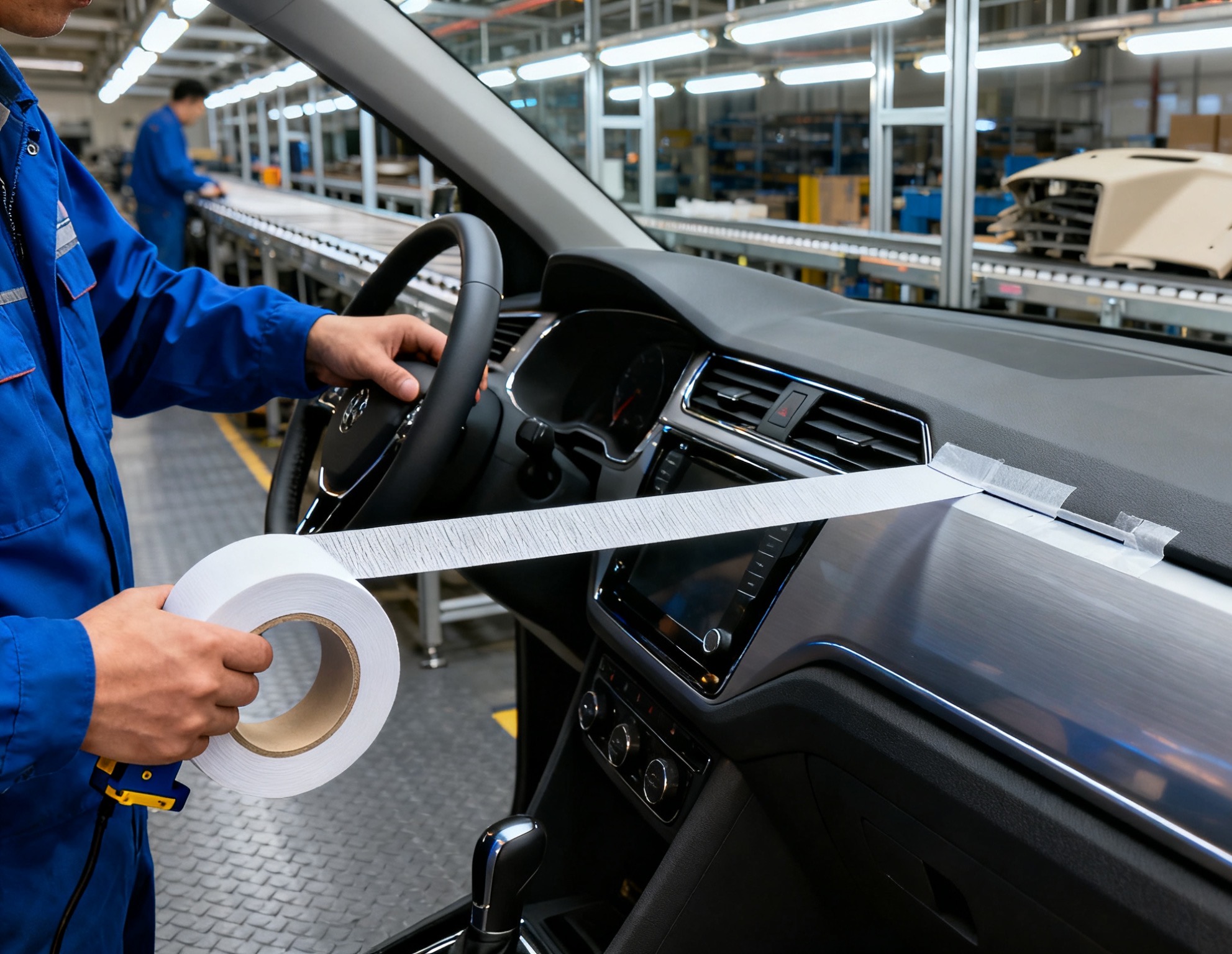
The automotive industry places the most stringent demands on vibration resistance and durability of connections. The tapes are used to secure wiring harnesses, secure door trims, and install emblems. In 2026, the trend was the use of tapes with an increased thickness of the adhesive layer (up to 60 microns) to compensate for uneven painted surfaces of new car models. Manufacturers report a 20% reduction in assembly time by moving from mechanical fasteners (bolts, clips) to adhesive mounting. In addition, the absence of holes in the body improves the car's anti-corrosion protection, which is an important marketing advantage.
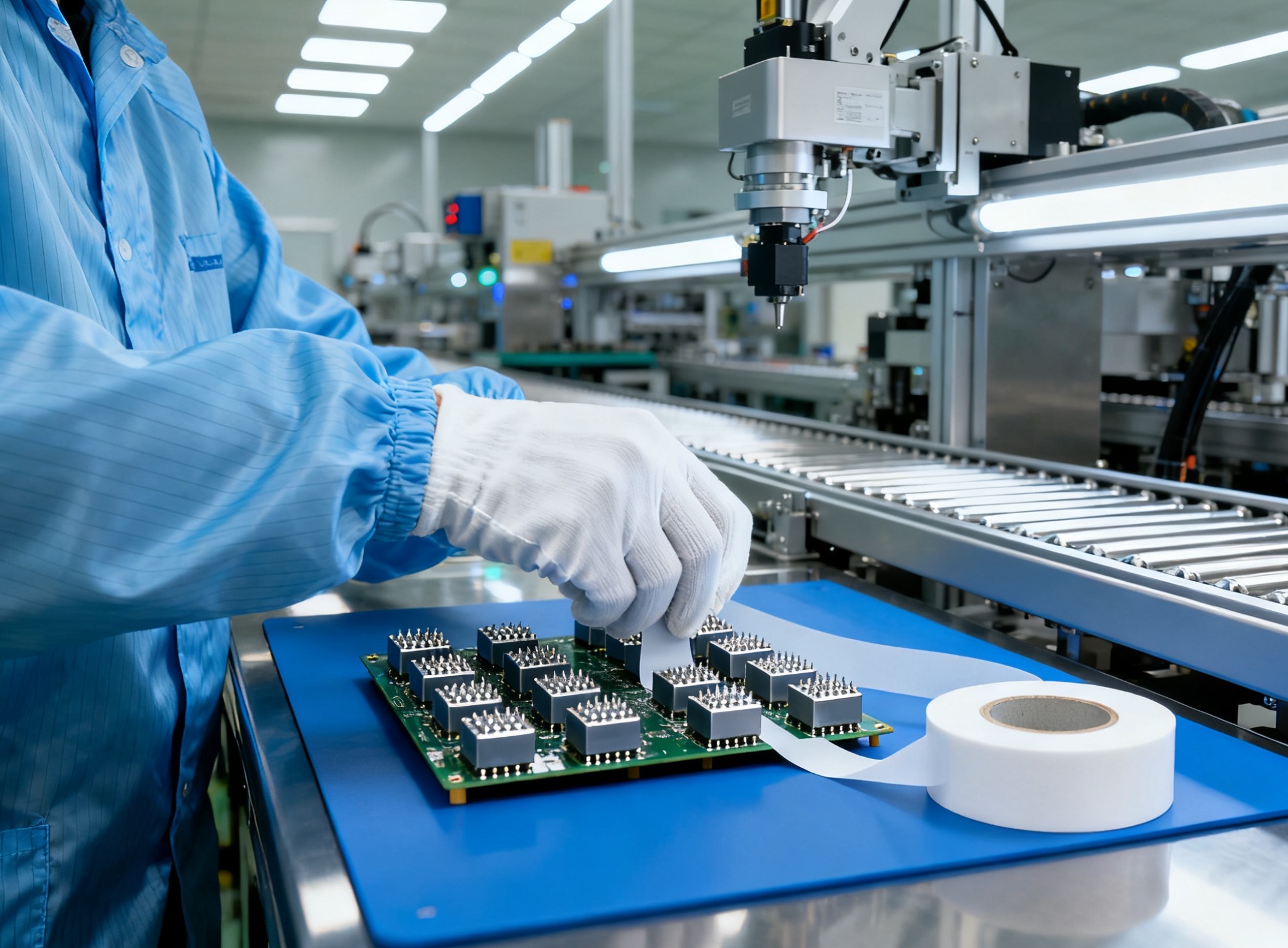
In the consumer electronics sector, cleanliness of the process and the absence of volatile substances (VOC) are key. Low odor and high heat resistance fabric tapes are used to secure transformers and motors in washing machines and air conditioners. Here, not only strength is important, but also the dielectric properties of the material. The wrong choice of tape with conductive adhesive or backing can result in a short circuit. We recommend using only products that have passed electrical strength tests and have the appropriate safety certificates (UL, VDE).
The packaging industry is also actively introducing fabric straps to form heavy pallets and secure loads. Unlike plastic tapes, fabric options allow you to create detachable connections that can be carefully removed without damaging the packaging. This is especially true for reusable packaging and return logistics. The implementation of such solutions in the warehouse of one of the retailers made it possible to reduce losses of product packaging by 12% and speed up the process of unloading trucks by 25 minutes due to the ease of working with the material. The flexibility and strength of the fabric make it ideal for non-standard loads.
Furniture manufacturing uses double-sided tapes to temporarily secure parts before final assembly or for mounting decorative elements. What is important here is high initial tack, which allows the part to be held immediately after pressing without the need for prolonged pressing. Modern adhesives make it possible to adjust the position of a part within 5-10 minutes, which gives workers time to make an accurate fit. The transition to high-quality Chinese analogues has allowed many furniture factories to reduce production costs while maintaining high build quality.
Frequently Asked Questions
What is the minimum order quantity (MOQ) to receive factory price?
For standard sizes and adhesive compositions, most factories are ready to offer a wholesale price when ordering from 200 to 500 rolls (depending on width). If you require customization (custom width, liner printing, special glue), the minimum threshold is usually 1000 rolls or one full production line load (about 3-5 tons of glue). However, there are order consolidation strategies that allow small buyers to band together to get better deals. Don’t be afraid to ask about the possibility of a trial batch at an increased price with the condition that the difference will be recalculated for a subsequent large order.
How to check the quality of glue before purchasing a large volume?
The only reliable way is to perform a peel test and a shear test under simulated operating conditions. Take a sample, stick it to the target surface, load it with weight and place it in a heat chamber or refrigerator depending on your requirements. Don't limit yourself to visual inspection or simple finger sticking. Request a test report from the supplier according to ASTM D3330 or ISO 29862 standards. If the supplier cannot provide such data or refuses to send samples for independent testing, this is a red flag that the product is of poor quality.
What is the difference between acrylic and rubber adhesive for my applications?
The choice depends on the operating environment. Acrylic adhesive is superior to rubber in its resistance to ultraviolet radiation, oxidation and high temperatures (up to +150°C), which makes it ideal for external use and long-term connections (service life 5-10 years). Rubber adhesive provides higher initial tack and adheres better to rough or dirty surfaces, but ages faster (service life 1-3 years) and is susceptible to UV rays. If your product will be exposed to the sun or in an aggressive environment, choose acrylic. For internal packaging or temporary fixation, rubber will be a more cost-effective solution.
How long does it take to deliver from China to Russia or CIS countries in 2026?
Delivery times vary depending on the route chosen. Sea transportation to the ports of the Far East with subsequent railway shipment takes 25-35 days. Direct railway communication through Kazakhstan or Mongolia allows you to deliver cargo in 18-22 days to the central regions. Road transport is the fastest (12-16 days), but the most expensive and depends on the situation at the border. Also consider production time (usually 15-20 days after order confirmation and deposit payment) and customs clearance (3-7 days). Plan your purchases at least 2 months before the actual need for the product.
Is it possible to order a tape with your own brand (Private Label)?
Yes, almost all serious factories offer the Private Label service. You can order your logo printed on siliconized paper (liner) and individual packaging of boxes. This usually requires an additional minimum order (eg 500-1000 rolls) and plate making costs. The time required to prepare a layout and approve a color proof takes about 7-10 days. Make sure that the design rights are yours and are secured in the contract to avoid situations where your brand is used by the supplier to sell to other clients.
Conclusion and procurement strategy for next year
MarketChina double sided fabric tapein 2026 offers unprecedented opportunities for those who are ready to approach the issue professionally. Direct work with factories allows you to reduce costs by 20-30% compared to purchasing through local distributors, but requires a deep dive into technical details and competent risk management. The key to success lies not in finding the lowest price, but in building long-term relationships with a trusted partner who can guarantee consistency in quality and delivery times. Investments in supplier audit, sample testing and legal protection of the transaction pay off many times over in the form of uninterrupted operation of your production.
Don't delay modernizing your sourcing strategy. The world is changing quickly, and those companies that establish direct contacts with Chinese factories today and implement strict quality control procedures will tomorrow gain a competitive advantage in the form of better margins and product reliability. We are ready to share our experience and help you find the optimal solution for your problems. Remember that the right tape is not just a consumable, it is a guarantee of the quality of your final product.
If you are ready to discuss procurement details, receive an up-to-date price list or consult on technical issues,Contact us today. Our experts will help you analyze your current needs and offer options for optimizing supplies. For more information on other industrial materials, visit our sectioncatalog of industrial fasteners and adhesives, where you'll find in-depth product reviews and comparisons.