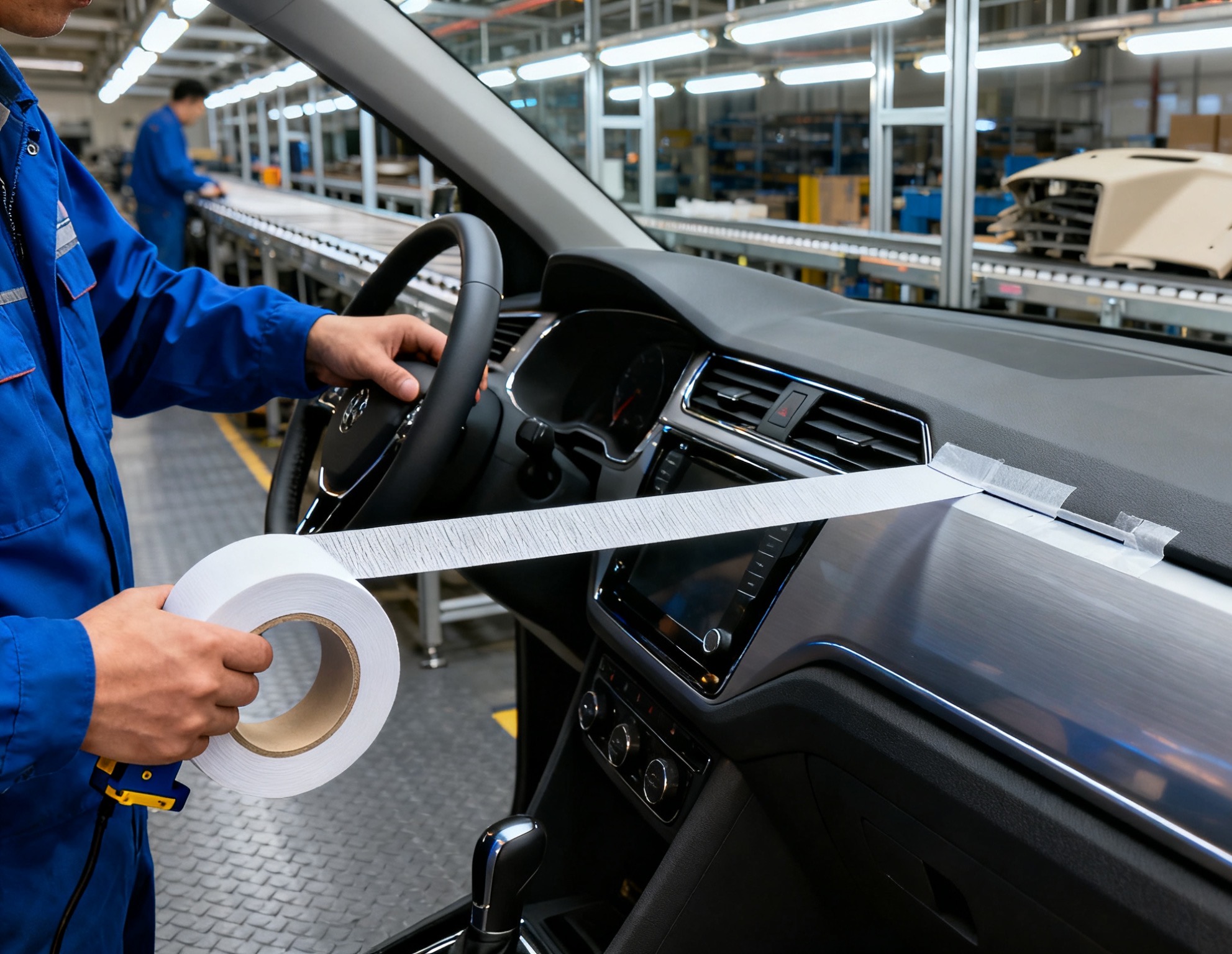




China masking tape 2026: prices, review of manufacturers and where to buy
2026-04-29
- China masking tape 2026: why the market has changed and how not to lose money on purchases
- Technical parameters: how to read the specification and not make mistakes
- Review of Chinese masking tape manufacturers: who actually makes the product
- Certifications and standards: EAC, GOST and 2026 requirements
- Logistics and Pricing: Hidden Costs of Importing
- Typical purchasing mistakes and how to avoid them
- Where to buy and how to place an order: step-by-step algorithm
- Frequently Asked Questions
- Conclusion
China masking tape 2026: why the market has changed and how not to lose money on purchases
The painting consumables market will experience a tectonic shift in 2026. If three years ago the request “China masking tape” meant a search for the cheapest option for temporary marking, today it is a signal of the search for a technological solution with controlled adhesion. We are seeing a situation where European brands have left the mass segment or raised prices by 40-60%, leaving a niche for high-tech Chinese factories that have introduced automated glue application lines.
In our practice of working with industrial customers from Russia and the CIS, we encountered a paradox: when buying tape at a price below $0.8 per roll, clients lost up to 15% of the budget for repainting parts due to residual adhesive (residue). China's masking tape 2026 is not a monolith. The products range from artisanal workshops in Hebei province to high-tech giants in Jiangsu using imported Japanese adhesives and American crepe paper.
This article was written by engineers who personally tested samples for adhesion at temperatures ranging from -20°C to +140°C. We will not give abstract advice. Here you will find specific parameters, data about real manufacturers and a selection algorithm that will save your project from being defective. If your goal is to find a reliable supplier, and not just buy “something cheap,” read each section carefully.
Technical parameters: how to read the specification and not make mistakes
Most buyers make the same mistake: they only look at the price per roll and the total length. In 2026, the key parameter was not the length, but the type of adhesive layer and the heat resistance of the base. Chinese manufacturers have learned to disguise low quality as high performance, so you only need to trust the numbers in the technical data sheet (TDS), confirmed by laboratory tests.
Adhesion to Steel is the first parameter we pay attention to. For standard body repair work, the optimal range is 2.5–3.5 N/cm. If a manufacturer claims 5 Ncm for an all-purpose tape, that's a red flag. Too much adhesion will cause the tape to tear off the top layer of paint when removed or leave traces of adhesive that will have to be removed with a solvent. In one case, our client lost a shipment of door panels precisely because of the use of “reinforced” tape where delicate tape was required.
Thermal resistance determines the usage scenario. It is important to distinguish between drying temperature and operating temperature. Cheap analogues from China often withstand 80°C for 30 minutes, but degrade at 120°C in the polymerization chamber. Powder coating requires a tape that can withstand 180-200°C for a minimum of 20 minutes without caramelizing the adhesive. Look for the "High Temperature" marking on the specification and testing to ASTM D6475.
The Backing Material is also critical. In 2026, impregnated crepe paper became the standard. Smooth paper (flatback) is used only for flat surfaces and gives a clear line, but does not fit curved parts well. Paper thickness varies from 135 to 185 microns. Thinner paper follows contours better, but tears more easily when unrolled. The optimal choice for auto repair is 160 microns with an elasticity of at least 15%.
Dwell time is a parameter that is often kept silent. High-quality Chinese tape gains full adhesion 24 hours after gluing. If you need to remove the tape immediately after application (such as when screen printing), look for products labeled "Low Tack" or "Instant Release". Ignoring this parameter will result in the tape breaking when removed.
Recommendation:Before bulk purchasing, be sure to request a 50 mm sample from the supplier and conduct an aging test: apply the tape to the painted panel, heat it in an oven to operating temperature and try to remove it after 1 hour and after 24 hours. The difference in the behavior of the glue will tell you more than any certificate.
Review of Chinese masking tape manufacturers: who actually makes the product
The Chinese market is heterogeneous. The query “China masking tape” returns thousands of results, but 80% of companies are traders who buy products from third-party factories and apply their own label. To obtain stable quality in 2026, you need to work directly with factories that have a full production cycle: from paper impregnation to glue application and cutting.
We have identified three echelons of manufacturers with whom it makes sense to work:
- First echelon (Technology leaders):Factories in Jiangsu and Zhejiang provinces. These companies use equipment from Germany (for example, W&H lines) and raw materials from world leaders. Their products are often exported to Europe under private labels. Prices here are above average, but stability of parameters is guaranteed. Examples of such clusters are around the cities of Suzhou and Ningbo.
- Second echelon (Optimal ratio):Enterprises in Shandong and Hebei provinces. They produce 70% of China's domestic market. The quality is good, but may fluctuate from batch to batch. Strict input control is important here. These factories are more flexible in terms of order (MOQ) and are more willing to customize the width of the roll or the length of the sleeve.
- Third echelon (Dumping):Small workshops, often located deep in mainland China. Their main argument is the price is 20-30% lower than the market. However, in 2026, savings on the adhesive layer led to the fact that such tapes often flow when heated or leave a sticky layer. It is worth working with them only for rough construction work, where cleanliness of removal is not critical.
A striking example of a first-tier manufacturer is the companyEnping Sunli Adhesive LLC. This professional factory has been on the market for over 23 years (since 1997), specializing in the development and production of high-quality adhesive materials. Unlike many competitors, Sunli has a full production cycle and ISO 9001:2008 and ISO 14001 certificates, which guarantees the stability of the characteristics of each batch. The company's product range extends far beyond conventional masking tape, producing a wide range of solutions including double-sided fabric, PET and foam (PE/EVA) tapes, nano-magnetic tapes, VHB, as well as specialty materials for the automotive and furniture industries such as Finger Lift Tape and Pre Tape Masking. With the ability to provide custom OEM/ODM solutions, the company tailors sizing, packaging and adhesive properties to meet specific customer needs, ensuring high adhesion and resistance to extreme temperatures and humidity.
It is important to understand geography. Factories located closer to ports (Shanghai, Ningbo, Qingdao) have an advantage in logistics, but their rent is more expensive, which affects the price of the product. Factories in the inland provinces are cheaper, but the delivery time to the port can add 5-7 days to the total delivery time.
When choosing a partner, pay attention to the presence of their own laboratories. First-tier factories must have a quality control (QC) department, where each batch of glue is tested for viscosity and adhesion. Ask for a video tour of the production or a test report on the latest batch. If a supplier only sends general ISO certificates from five years ago, this is a sign of a trader or factory with low levels of control.
Advice:Avoid suppliers who offer a “one-size-fits-all tape.” Specialization is a sign of professionalism. If a factory makes packaging tape, duct tape, and masking tape at the same time, they most likely have a secondary paint line. Look for those who focus on adhesive tapes for the industry.
Certifications and standards: EAC, GOST and 2026 requirements
The import of industrial consumables into Russia and the EAEU countries in 2026 requires strict compliance with the regulatory framework. Simply having a piece of paper from a Chinese manufacturer no longer works. Customs authorities have tightened inspections of product compliance with technical regulations of the Customs Union (TR CU).
The main document is the Declaration of Conformity TR CU 007/2011 “On the safety of products intended for children and adolescents” (if the tape is positioned as household) or TR CU 019/2011 “On the safety of personal protective equipment” (if the tape is used in PPE). However, for industrial masking tape, a waiver letter or proprietary declaration is more common if the product is not directly regulated under hazardous substances.
The key point is the chemical composition of the glue. European REACH standards and the Chinese equivalent GB 21027 limit the content of volatile organic compounds (VOCs) and heavy metals. In 2026, Russian laboratories of Rospotrebnadzor began randomly testing imported tapes for migration of harmful substances. If the adhesive contains prohibited plasticizers, the shipment will be destroyed at the importer's expense.
An ISO 9001 certificate from a Chinese factory is a good sign, but it certifies a management system, not a specific roll of tape. It is much more important to have test reports according to ASTM (USA) or DIN (Germany) standards, which are recognized throughout the world. For example, heat resistance test according to ASTM D6475 or adhesion test according to ASTM D3330.
To work with government customers in the Russian Federation, compliance with GOST R is often required. Many Chinese factories have already adapted their products to Russian standards, for example, GOST R 53225-2008 (for general purpose tapes). Check with your supplier to see if they can provide test reports from an accredited laboratory accepted in your country.
Product labeling must also be in Russian. According to the law, the label or insert must indicate: name of the product, date of manufacture, expiration date, storage conditions, information about the manufacturer and importer. The absence of Russian markings is grounds for a fine and removal of goods from a temporary storage warehouse.
Action:Before shipping a shipment from China, request a draft label in Russian from the supplier and coordinate it with your customs broker. This will save weeks of cargo waiting at the border.
| Comparison parameter | Premium segment (Europe/Japan) | China: First Echelon (Jiangsu/Zhejiang/Guangdong) | China: Budget segment |
|---|---|---|---|
| Price per roll (50mm x 50m) | $2.50 – $3.80 | $1.10 – $1.60 | $0.60 – $0.90 |
| Heat resistance (max) | up to 220°C (stable) | up to 180°C (depending on the batch) | up to 100°C (risk of melting) |
| Residual adhesive (Residue) | 0% (guaranteed) | <2% (if the regimen is followed) | 10-15% (high risk) |
| Minimum quantity (MOQ) | 1 pallet (mixed) | 50-100 boxes (one article) | From 1 box |
| Production time | 4-6 weeks | 15-25 days | 3-7 days (from warehouse) |
| Application | Aviation, premium cars, electronics | Auto repair, construction, furniture | Rough work, packaging |
Logistics and Pricing: Hidden Costs of Importing
The FOB (Free On Board) price you see in the price list of the Chinese factory is just the tip of the iceberg. In 2026, the supply chain has become more complex, and the final cost per unit of product in your warehouse may differ from the contract price by 35-45%. Our experience shows that many companies underestimate the costs of customs clearance and domestic delivery.
Sea freight remains the most profitable option for volume orders. Painting tape is a lightweight but bulky product. When calculating shipping costs, cubic weight is critical. A standard box with 36 or 48 rolls takes up a significant amount of space. One 20-foot container holds approximately 1200-1400 boxes of standard tape. If you order less than a container (LCL), the shipping cost per item increases dramatically, making the transaction unprofitable.
The customs duty on masking tape (HS code 3919 10 or 5903 depending on the base) varies, but on average is 5-10% of the customs value. Don't forget about VAT (20% in the Russian Federation), which is paid at customs. There is also a customs fee for paperwork, which is fixed, but for small shipments it significantly impacts the margin.
Exchange rate risks will not go away in 2026. Renminbi (CNY) contracts have become the standard for settlements with China, avoiding double conversion through the dollar. However, the volatility of the ruble against the yuan requires the use of hedging instruments or fixing the exchange rate in the supply agreement. We recommend budgeting a safety margin of 5-7% for currency fluctuations.
Delivery times by sea from the ports of China (Shanghai, Ningbo, Qingdao) to the ports of the Far East or Novorossiysk range from 18 to 35 days. Railroad delivery is faster (12-18 days), but 20-30% more expensive. For urgent orders, it is sometimes advisable to use air delivery, but only if the margin of your project allows you to cover the high freight rate.
Packaging plays an important role. Masking tape is sensitive to moisture and pressure. Demand from the supplier reinforced cardboard boxes and the mandatory use of pallets with corners and stretch film. Damage to the ends of the rolls during transportation will make some of the goods unsuitable for sale or use in vending machines.
Strategy:Calculate the landed cost (full cost) before signing the contract. The formula is simple: Product price + Freight + Insurance + Duty + VAT + Brokerage services + Delivery to the warehouse. Only this figure will show the real benefits from imports.
Typical purchasing mistakes and how to avoid them
Over the years, we have seen dozens of cases where good intentions to save money led to multimillion-dollar losses. Analysis of these situations allows us to identify a number of typical mistakes made by buyers of masking tape from China.
Mistake #1: Ignoring the glue aging test.Many people test the tape immediately after receiving the sample. It sticks and comes off perfectly. But after a week of storage in a warehouse, especially in hot conditions, the properties of the glue change. Cheap adhesives based on natural rubber can oxidize and turn into resin. Always perform an “accelerated aging” test: keep the sample in a warm place (+40°C) for a week and then try to remove it.
Mistake #2: Ordering a “universal” width.Trying to unify the warehouse, companies order tape only 50 mm wide. However, in real conditions, 30% of operations require a narrow tape (19 mm, 25 mm) for working in hard-to-reach places, and 20% require a wide tape (75 mm) for gluing large surfaces. Lack of the required width leads to waste of material and loss of time for workers. The assortment must correspond to the technical process.
Mistake #3: Saving on the sleeve.It would seem that a cardboard tube inside a roll is a trifle. But if the sleeve is too soft, it will become deformed during winding or transportation. This leads to tape jamming in dispensers and automatic painting lines. Request from your supplier a sleeve with a wall thickness of at least 3 mm made of multi-layer cardboard.
Mistake #4: Lack of control of the first batch.Relying on a new supplier without inspecting the goods before shipment is a recipe for disaster. Chinese factories can send an ideal sample (Golden Sample), and put a second-class product in a mass batch. Please hire an independent inspection company (such as SGS or local agents) to inspect the goods at the factory before paying the balance. It costs $200-300, but saves you from losing thousands of dollars.
Mistake #5: Improper storage.Even the best quality tape will deteriorate if stored incorrectly. Direct sunlight, high humidity or proximity to heat sources kill the adhesive layer. Instruct your warehouse staff that the tape should be stored in its original packaging, in an upright position (to avoid flattening), at a temperature of 15-25°C and a humidity of 40-60%.
One of our clients, a large furniture manufacturer, was faced with the fact that the entire batch of tape, purchased at an ultra-low price, began to leave marks on varnished surfaces a month after application. The reason lay in the supplier's use of a cheap solvent in the production of glue, which evaporated slowly. The result is complaints from end customers and loss of reputation. The cost of the cheap tape was negligible compared to the damage.
Conclusion:A cheap purchase can become an expensive mistake. Investments in a quality product and careful control pay off in the absence of defects and downtime.
Where to buy and how to place an order: step-by-step algorithm
Finding a reliable supplier in 2026 requires a systematic approach. Platforms like Alibaba are useful for initial research, but should not be your only source of information. Here is the algorithm of actions that we recommend to our clients to minimize risks.
- Formation of technical specifications (TOR).Clearly describe what you need: width, length, type of substrate (paper, film), required adhesion, heat resistance, color. Please indicate your monthly consumption. The more detailed the technical specifications, the more accurate the proposals from factories will be.
- Search and filtering.Use the keywords "Masking Tape Manufacturer" instead of "Supplier". Check the company's business license through Chinese registries (eg Qichacha). Weed out traders who have everything in their assortment: from screws to textiles. Look for specialized factories with a history, such as the aforementioned Enping Sanli Adhesive, where production experience exceeds two decades.
- Request samples.Request samples from 3-5 potential suppliers. Be sure to pay for delivery of samples by express mail - this will show the seriousness of your intentions and the speed of the seller’s response. Conduct comparative testing of samples in your own conditions.
- Negotiations and audit.Negotiate payment terms (usually 30% in advance, 70% before shipment or against a copy of the bill of lading). Request a video call from the production line. Ask to see the glue application and cutting process. This will weed out 90% of scammers and intermediaries.
- Trial batch.Don't order a container right away. Start with a trial batch (LCL or Small Container Lot) to test logistics, packaging quality and how the product performs under real-life conditions.
- Contract and specification.The contract clearly states technical parameters, permissible deviations, penalties for defects and return conditions. A reference to the approved sample must be an integral part of the contract.
When working with China, it is important to consider the cultural aspect. Relationships are built on trust and personal contact. Regular communication, factory visits (when possible) and showing interest in your partner's business will work wonders. A supplier who considers you a strategic partner will prioritize your orders during periods of raw material shortages.
It is also worth considering the possibility of working with Russian distributors who have already delivered goods and maintain a warehouse in Moscow or St. Petersburg. Yes, the price will be 15-20% higher, but you receive the product “here and now”, with ready-made documents and a guarantee. For operational needs, this is often the only correct solution.
Final tip:Don't chase the lowest price on the market. In the industrial masking tape segment, a 10-cent difference between suppliers often means a difference in adhesive quality that will only become apparent during the painting phase. Choose a balance between price and reliability.
Frequently Asked Questions
What is the minimum quantity (MOQ) for ordering masking tape from China?
Typically, factories set the MOQ at 500-1000 rolls of one size to begin production. However, many factories have warehouse balances of standard items (50mm x 50m), which can be shipped from 50-100 rolls. Exclusive colors or custom widths will require a full production run and the MOQ can rise to one container (10,000+ rolls).
Can I put my logo on the tape and packaging?
Yes, most Chinese manufacturers, including market leaders, offer OEM services. Applying a logo to the tape itself (printing on crepe) is possible when ordering from 3000-5000 rolls, as it requires setting up the printing machine. Printing on boxes and labels is available for smaller runs (from 500 rolls). Please note that design development and preparation of printed forms will take an additional 7-10 days.
What is the shelf life of masking tape and how should I store it?
The standard shelf life of high-quality masking tape is 12 months from the date of production if stored in the original packaging at a temperature of 15-25°C and a humidity of 40-60%. After this period, the glue may lose its properties (dry out or, conversely, leak). We do not recommend using expired tape for critical work, even if visually it looks normal.
What is the difference between natural rubber tape and synthetic adhesive tape?
Tapes based on natural rubber (Rubber based) have a high initial stickiness (tack) and adhere well to uneven surfaces, but have lower heat resistance (up to 80-100°C). Tapes based on synthetic rubber or acrylic (Acrylic/Synthetic) are more heat-resistant (up to 140-180°C), resistant to UV radiation and aging, but require more time and pressure to achieve full adhesion. The choice depends on the task: rubber is suitable for quick repairs, acrylic or hot melt adhesive is suitable for a painting booth.
How to check the quality of the tape without a laboratory?
Carry out a simple test: stick the tape on a smooth glass surface, press firmly with a roller and leave for 24 hours. Then try to shoot it at an angle of 180 degrees. A high-quality tape should be removed cleanly, without tears and without glue residue. Also check the uniformity of winding: the roll should be tight, without air bubbles and displacement of layers (“telescoping”). The edge of the ribbon should be smooth, without fringe.
Conclusion
China's masking tape market in 2026 offers unique opportunities to optimize costs without sacrificing quality, but only for those willing to dive into the details. Blind faith in a low price or brand no longer works. The key to success lies in understanding the technical nuances, strict control of suppliers and competent logistics planning.
We have seen how choosing the right supplier reduced the cost of painting jobs by 25% and eliminated waste. Conversely, attempts to save 10% on purchases led to losses of 200% on rework. Your choices today will determine the efficiency of your production tomorrow.
If you are looking for trusted partners or need expert assessment of technical documentation from Chinese factories, do not leave it to chance. A professional approach to procurement is an investment in the stability of your business.
Contact us todayfor advice on sourcing and auditing your current supply chain. We will help you find the balance between price and quality that your production needs.
For further study of the topic, we recommend that you read our materialA complete guide to industrial tapes and their applications, where we examine the nuances of using various types of adhesives in difficult operating conditions.