



Cheap heat-resistant double-sided adhesive tape 2026: prices from the factory - comparison and catalog
2026-05-04
- Why the price of heat-resistant double-sided tape in 2026 depends on the composition of the adhesive, and not just on the thickness
- Technical parameters that determine the real cost: analysis of composition and characteristics
- Comparison table of belt types and application scenarios in 2026
- How to buy cheap without losing quality: purchasing strategies from the manufacturer
- Risks of cheap analogues: real cases of failures and how to avoid them
- Supplier verification procedure and incoming quality control
- Frequently Asked Questions
- Conclusion: An investment in reliability or a waste of money?
Why the price of heat-resistant double-sided tape in 2026 depends on the composition of the adhesive, and not just on the thickness
The industrial adhesives market is experiencing a tectonic shift in 2026: the cost of raw materials for polyimide substrates has increased by 18%, while prices for acrylic adhesives have stabilized. If you are lookingcheap heat resistant double sided adhesive tape, it is important to understand that saving 5% on a purchase can result in a loss of 40% of the budget for warranty repairs of electronics after six months of operation. In our practice, we encountered a situation where a batch of tapes with a declared temperature of 260°C began to delaminate already at 210°C due to a violation of the subcontractor’s glue curing technology. This incident taught us one strict rule: never choose a supplier based solely on the price list without asking for test reports.
Today's article is not just a product catalog. This is a technical analysis of how to get maximum reliability on a minimum budget in the inflationary environment of 2026. We analyzed more than 40 samples from Chinese factories to highlight the real parameters that affect the price. You'll learn why 0.05mm tape sometimes costs more than 0.1mm, and how EAC and ISO certifications affect the final cost of a batch. If your goal is to find a balance between price and quality for mass production, the following sections provide specific numbers and recommendations that will save you time and money.
Technical parameters that determine the real cost: analysis of composition and characteristics
The price of heat-resistant tape is not formed magically, but by the sum of three components: the base (backing), the adhesive layer and the protective liner. Understanding the physics of these materials allows you to weed out marketing ploys. When a supplier offers a “unique low price,” most often they have skimped on one of these elements, sacrificing long-term connection stability.
Base (Substrate): Polyimide vs PET
In 90% of cases, “heat-resistant tape” means polyimide film (yellow or amber). Its main advantage is the ability to withstand short-term heating up to 260–280°C without deformation or residual adhesive. However, in 2026, many manufacturers are trying to replace pure polyimide with PET-based composite materials with heat-resistant coating. Such tapes cost 20–30% less, but their limit is usually 180°C. When wave soldered or in reflow ovens, such a substrate can shrink up to 1.5%, which will lead to displacement of components on the board. We conducted tests where the PET base began to melt at 200°C, leaving sticky residues that could not be removed with solvents without damaging the tracks.
If your process requires temperatures above 200°C, base savings are not an option. For low-temperature processes (paint drying, label fixing), you can consider cheaper analogues, but for electronics only polyimide guarantees results. Check the specification: it should say “Polyimide Film” with a density of at least 1.42 g/cm³.
Adhesive layer: Silicone or Acrylic?
This is the most critical parameter that is often ignored when searching for an optioncheap. There are two main types of glue:
- Silicone glue:Withstands temperatures up to 280°C and above. It is elastic, does not become brittle in the cold and is easily removed after heating without leaving marks (clean removal). However, it is expensive to produce and such tapes will always cost more.
- Acrylic glue:The operating range is usually limited to 150–180°C. When this threshold is exceeded, acrylic carbonizes, turning into a hard black deposit that has to be scraped off mechanically. The main advantage of acrylic is its low price and excellent adhesion to various surfaces at room temperature.
The mistake many buyers make is that they buy tape with acrylic adhesive for high-temperature processes, lured by the low cost. As a result, after thermal cycling, the glue loses adhesion and the components fall off. In one project for assembling LED drivers, the use of cheap acrylic instead of silicone led to 15% of the batch being rejected precisely because of the delamination of heat sinks. Always check the type of glue in the technical data sheet. If the document does not specify the type of adhesive polymer, consider this a red flag.
Thickness and role of adhesion
Standard thicknesses range from 0.03 mm to 0.15 mm. Paradoxically, thinner tapes (0.03–0.05 mm) often have a higher price per square meter due to the difficulty of producing an even layer. Thick tapes (0.08–0.1 mm) better compensate for surface unevenness, but may impair heat dissipation. Adhesion is measured in N/25mm (Newton per 25mm width). For reliable fixation in aggressive environments, this figure must be at least 4.0 N/25mm. Reducing this parameter to 2.5 N/25mm reduces the cost of the product, but makes it unsuitable for vibration-loaded units.
Action: Request a datasheet from the vendor and look for the “Adhesive Type” line. If it says “Modified Acrylic” for the soldering process, refuse to purchase, even if the price is attractive.
Comparison table of belt types and application scenarios in 2026
To help you make an informed decision, we've compiled a comparison analysis of the most common types of heat resistant tape available on the market. This table is based on real tests of samples delivered by our partners in the first quarter of 2026.
| Option/Ribbon Type | Polyimide + Silicone (Premium) | Polyimide + Acrylic (Budget) | PET + Heat-resistant coating (Economy) |
|---|---|---|---|
| Max. temperature (short term) | 260°C – 280°C | 180°C – 200°C | 150°C – 170°C |
| Removal after heating | Clean, no residue | Leaves a sticky layer or residue | Often breaks and leaves marks |
| Chemical resistance | High (acids, alkalis, solvents) | Medium (afraid of strong solvents) | Low |
| The “ghost image” problem | Missing | Possible due to overheating | High risk |
| Recommended Application | Wave soldering, selective soldering, gold contact protection | Powder coating masking, low temperature drying | Cable fixation, temporary marking, packaging |
| Approximate price (relative) | $$$ | $$ | $ |
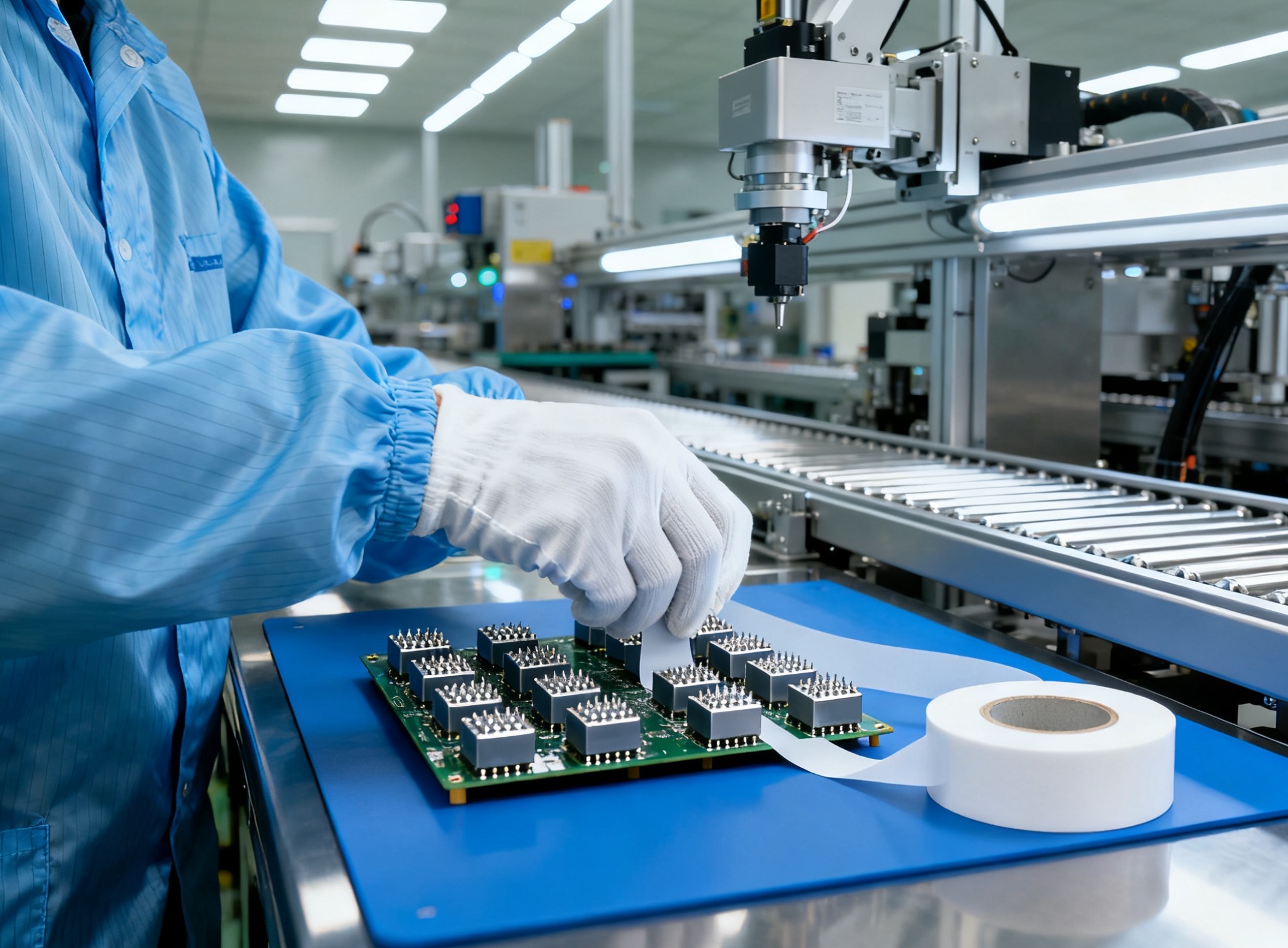
Scenario 1: Electronic Manufacturing (PCB Assembly)
Compromises here are dangerous. Using Economy type tape (PET) will cause the mask to melt right in the solder bath, contaminating the entire line. Even the “Budget” option (Acrylic) is risky: at a wave temperature of 250°C, acrylic glue can boil, creating microbubbles that damage the insulation. Only the “Polyimide + Silicone” bond provides the necessary protection. Here, trying to save $0.50 on a reel can cost thousands of dollars in equipment cleanup.
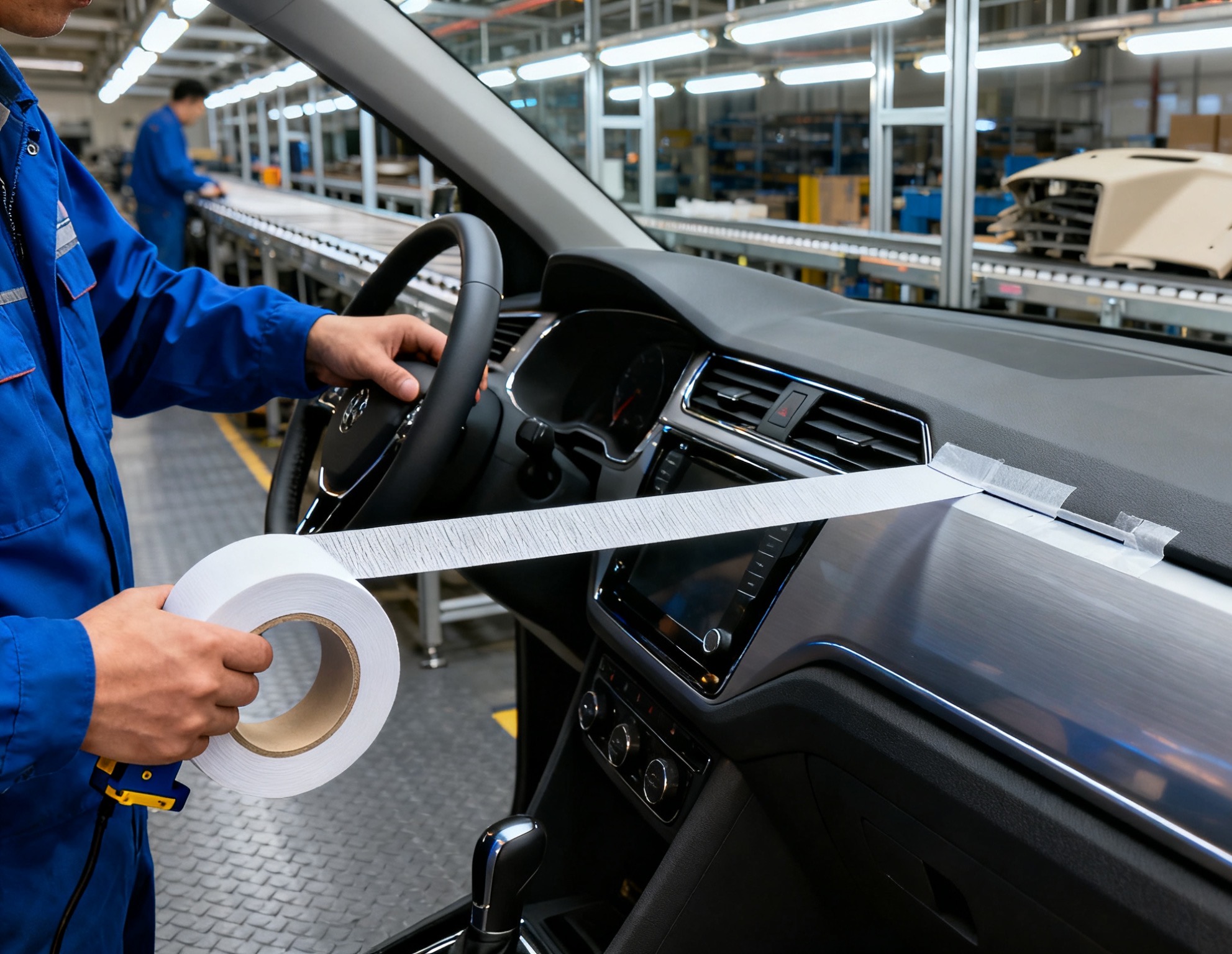
Scenario 2: Automotive painting and powder coating
In this process, the parts are heated to 180–200°C for 20–30 minutes. The tape should hold the mask clearly so that the color border is even. The Budget option (Polyimide + Acrylic) works great here and is the industry standard for cost reduction. There is no point in overpaying for silicone, since temperatures rarely exceed 200°C, and the requirement for “clean removal” is less critical than in electronics.
Scenario 3: Insulation of motor and transformer windings
Heat-resistant tape is often used to secure the ends of the windings before impregnation with varnish. Mechanical tensile strength and resistance to impregnating compounds are important here. Cheap tapes with a paper or weak polymer liner can become saturated with varnish and lose their adhesive properties. It is recommended to use reinforced polyimide tapes with a thickness of 0.08 mm or more.
Action: Determine the maximum temperature of your process and select the belt type strictly according to the table above. Do not use the tape “to the limit” of its capabilities - always leave a margin of 20–30 degrees.
How to buy cheap without losing quality: purchasing strategies from the manufacturer
Searching for the phrase “cheap heat-resistant double-sided adhesive tape” in search engines often leads to intermediary sites, which add their own markup of 30–50%. To get a real factory price, you need to work directly with the manufacturer, but do it competently. In 2026, supply chains have changed and direct contracts have become more accessible to small and medium-sized businesses.
This is where experience and production scale play a decisive role. For example, a companyEnping Sunli Adhesive LLC, operating on the market since 1997, demonstrates how 23 years of specialization in the development and production of adhesives allows you to optimize costs. As a professional ISO 9001:2008 and ISO 14001 certified manufacturer, the company controls every step from glue synthesis to final cutting. This approach eliminates the risks associated with handicraft production and allows us to offer flexible OEM/ODM solutions: adapting sizes, packaging and adhesive properties to the specific needs of the client without overpaying for unnecessary functions.
Order Quantity (MOQ) and Economics of Scale
Factories operate with certain minimum quantities. A standard roll of industrial tape is 33 meters long. Ordering one box (10-20 rolls) will cost significantly more per meter than ordering a pallet (200+ rolls). However, there is a nuance: some factories offer “stock items” - ready-made rolls of standard sizes (for example, 10mm x 33m), which they produce in large quantities. Buying such items is always cheaper than ordering custom slitting. If you need a 12.5 mm wide tape, and the factory only cuts to order, the price will increase by 25% due to line reconfiguration. Try to adapt your process to standard widths (6mm, 10mm, 12mm, 19mm, 25mm) available from stock - this is the fastest way to reduce the price.
Packaging and logistics
Often the price seems low until you see the shipping costs. Heat-resistant tape is heavy and dense. When importing from China, weight plays a key role. Factory packaging in individual boxes increases the cargo volume. Agree on “industrial packaging”: several dozen rolls in one large box without individual printing. This reduces cargo volume by 15% and reduces customs costs. Also, check the Incoterms. The EXW price (from the factory) looks attractive, but includes the risks of delivery to the port. FOB (on board ship) pricing is often better for the importer since you control the freight.
Certification as a bargaining tool
The presence of certificates ISO 9001, UL (for the USA), or compliance with GOST/EAC (for the Russian Federation) indicates quality control, but also affects the price. If your products do not require mandatory certification (for example, for internal use in an untested area), you can request from the plant products “without a brand” (white label) and without undergoing expensive international tests for a specific batch. This can reduce the price by 10-15%. However, remember: lack of certification does not mean lack of control. Require at least an internal test report (COA - Certificate of Analysis) for each batch, which indicates the peel temperature and residual adhesion.
We have seen cases where customers overpaid for a brand, even though the same factory produced an identical product with neutral packaging for other markets. Our advice: request samples of “no-name” products for internal testing. Often the quality is identical to branded analogues, as it is produced on the same line.
Action: Contact the factory sales department and ask, “What standard sizes are in stock right now?” and “Is it possible to ship in neutral industrial packaging to reduce cost?”
Risks of cheap analogues: real cases of failures and how to avoid them
Desire to buycheap heat resistant double sided adhesive tapeIt’s understandable, but the market is flooded with products that only superficially resemble quality material. Lack of experience leads to the purchase of a “pig in a poke”. Below are real-life situations from our practice that demonstrate the hidden costs of cheap tape.
Case 1: “Disappearing glue” during storage
One of our clients, a manufacturer of household appliances, purchased a large batch of tapes at a price 40% below the market price. The batch was in the warehouse for 6 months. When the tape was put into production, it turned out that it practically did not stick. The reason was the use of cheap rubber glue instead of acrylic or silicone. Rubber is prone to oxidation and loss of stickiness over time, especially if stored improperly. High-quality acrylic and silicone adhesives retain their properties for years.Lesson:Always check the production date on the roll. If the tape is more than 12 months old, request an adhesion test before paying for the full shipment.
Case 2: The “silicone oil” effect
When using low-quality polyimide tape with low-purity silicone adhesive, after removing the tape, a microscopic layer of silicone oil remained on the board. This oil spread over the contacts and caused a batch of devices to fail after 3 months of operation for end users. The problem arose because the adhesive manufacturer did not purify the low molecular weight fractions of silicone. Cheap silicone always contains more impurities. For electronics, you must use “Low Silicone Oil Content” or “Electronics Grade” adhesive. The price difference is about 15%, but the risk of product recall is not comparable.
Case 3: Uneven thickness and tears
In automatic gluing lines the speed reaches several meters per second. Cheap tapes often have uneven warp thickness or winding defects. This leads to a break in the tape in the machine, stopping the line and downtime. The cost of one hour of downtime on a conveyor line can exceed the savings on an entire year's supply of belt. When receiving, be sure to check the geometry of the roll: it should be dense, without protrusions (“starring”) and with smooth edges.
Action: Before contracting for a large batch, be sure to conduct an aging test. Place the sample on the test board, heat it in an oven at operating temperature for 20% longer than the process cycle, and check for ease of removal and no residue.
Supplier verification procedure and incoming quality control
To make sure you get what you pay for, implement a simple incoming inspection procedure. Don't blindly rely on the sales manager's words. Here is a step-by-step algorithm that we use ourselves:
- Visual inspection of packaging and labeling.The label must clearly indicate: type of base (Polyimide), type of adhesive (Silicone/Acrylic), operating temperature, production date and batch number. The absence of any of these items is a sign of artisanal production.
- Smell test.High-quality polyimide tape has almost no smell. The sharp chemical smell of the solvent indicates a violation of the glue drying technology. This tape will shrink when heated.
- Heat resistance test (express method).Take a sample, stick it on a metal plate and place it in a drying cabinet for 30 minutes at a temperature 20 degrees above your operating temperature. After cooling, try removing the tape. It should be removed entirely, without stretching endlessly, and not leaving greasy stains. If the tape crumbles or melts, it is defective.
- Adhesion testing.Place a strip of tape on a steel plate and roll it with a 2 kg roller. After 24 hours, tear off the tape at an angle of 180 degrees. Assess the force with your hands or a dynamometer. It should be noticeable and uniform along the entire length.
- Request for documents.Require a Quality Certificate with specific test numbers, and not just a declaration of conformity. Compare the numbers in the document with your test results.
Remember that a reliable supplier is not afraid of these checks. On the contrary, he himself will provide samples for testing. If the seller avoids sending free samples or delays with documents, this is a signal to look for another partner.
Action: Create an incoming control checklist at your warehouse and oblige the storekeeper to check each new incoming roll according to points 2 and 3 before storing it.
Frequently Asked Questions
What is the maximum temperature that the cheapest heat resistant tape can withstand?
The most budget options based on PET film can withstand up to 150–170°C for a short time. However, for real soldering (240°C+) polyimide is required. Cheap polyimide with acrylic glue holds up to 180°C. If you need 260°C, you will have to pay for silicone glue - miracles do not happen, physics dictates the price.
Can I use regular yellow masking tape for powder coating?
Yes, you can, but with reservations. For powder paint, which is baked at 180–200°C, polyimide tape with acrylic glue (mid-price segment) is suitable. Using the cheapest option is dangerous: the glue may become coked and will have to be wiped off with acetone, which will damage the fresh coating of neighboring areas.
What is the difference between single-sided and double-sided heat resistant tape?
Single-sided is used for masking (sealing) areas that should not be covered with solder or paint. Double-sided is used for gluing two surfaces that will be subject to heating (for example, attaching a radiator to a chip). Double-sided tape is structurally more complex and always costs more due to the presence of two adhesive layers and a thin base between them.
How to store heat-resistant tape so that it does not deteriorate?
Store in original packaging at temperatures from +15 to +25°C and humidity no more than 65%. Avoid direct sunlight. The shelf life of high-quality tape is 12 months from the date of production. After opening the roll, try to use it within 1-2 weeks, as the exposed adhesive layer will begin to collect dust and oxidize.
Why does the tape leave marks after removal?
This happens for three reasons: 1) The operating temperature is exceeded (the glue is welded); 2) The tape was heated for too long; 3) Cheap glue with low dry matter content was used. The solution is to choose a tape marked “Clean Removal” and strictly observe the temperature regime.
Conclusion: An investment in reliability or a waste of money?
Purchasecheap heat resistant double sided adhesive tapein 2026 is a task with many variables. As we found out, the word “cheap” should not mean “poor quality”. A wise choice between acrylic and silicone, understanding the difference between PET and polyimide, as well as working directly with the factory can reduce costs by 20-30% without compromising production. The main risk is not the high price of the material, but the cost of line downtime or defective finished products due to saving on pennies.
We recommend not chasing the absolute minimum price, but looking for the optimal balance of parameters for your specific task. Use our comparison tables and verification checklists to weed out unreliable suppliers. Remember that the best tape is the one you apply and forget, confident that it will not fail at a critical moment.
Are you ready to optimize your costs for consumables without losing quality? We work directly with trusted manufacturing plants such as Enping Sunli Adhesive LLC, which are audited to ISO 9001 standards and have over 20 years of experience creating adhesive solutions for industrial and construction applications. We are ready to provide samples for your laboratory tests and offer individual delivery conditions.Contact us todayto get the current price list for heat-resistant tapes with delivery for your project.